

Why the Las Vegas Sphere Failed — And Why They’re Building More
When the Las Vegas Sphere opened in September 2023, it looked like the future had landed behind the Las Vegas Strip.
The enormous spherical building was covered with an LED display capable of turning the structure into practically anything imaginable: a giant eyeball, the Moon, a basketball, an emoji or an advertisement visible across Las Vegas.
Inside was an even more astonishing piece of technology.
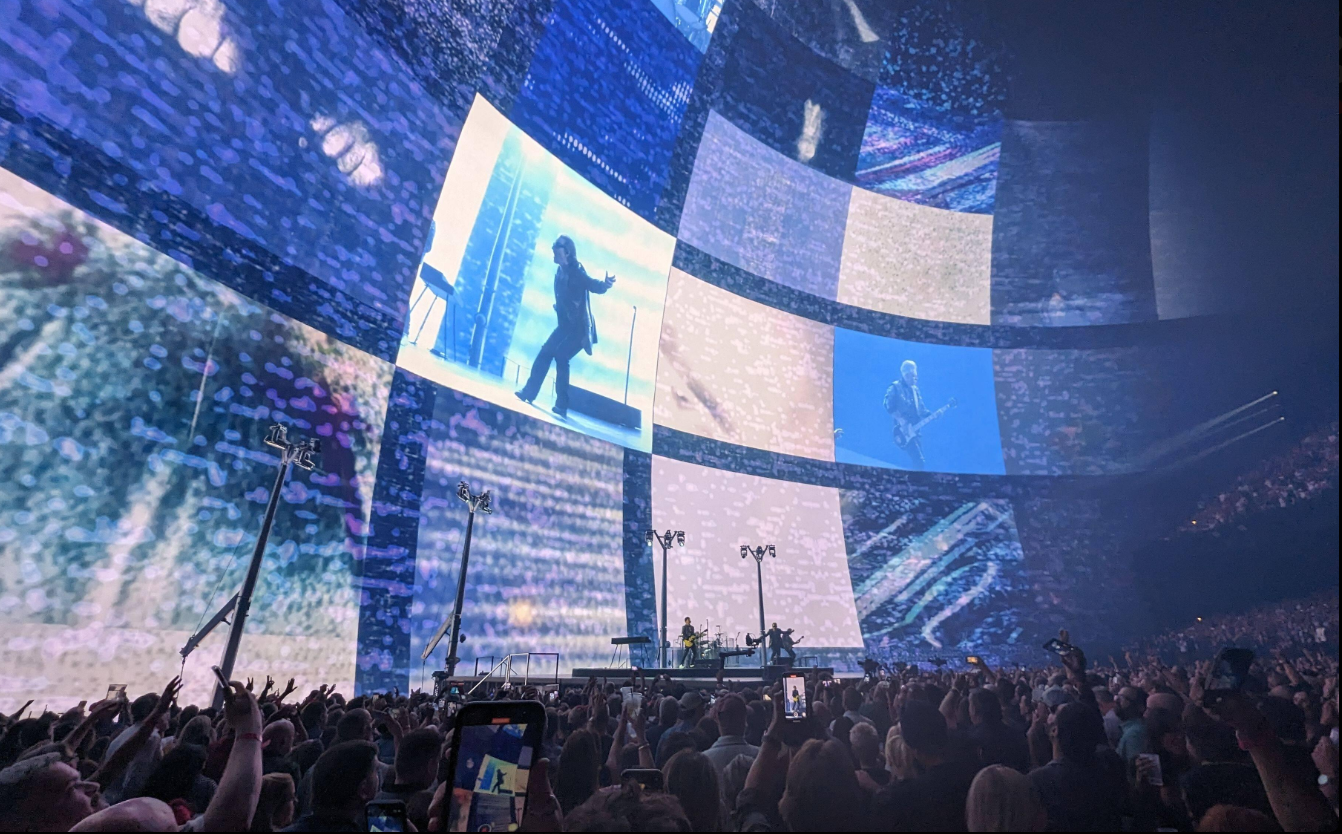
A massive wraparound LED display surrounded the audience, while advanced audio, haptic seats and environmental effects transformed concerts into experiences that traditional arenas simply couldn't reproduce.
There was just one problem.
The Sphere cost approximately $2.3 billion to build.
That's an extraordinary amount of money for an entertainment venue.
Even worse, Sphere Entertainment initially estimated the project would cost approximately $1.2 billion.
The final construction cost nearly doubled that early estimate.
Since opening, the Sphere has generated hundreds of millions of dollars in revenue and become one of Las Vegas' most recognizable landmarks. Yet the Sphere segment has also reported enormous accounting losses.
That has created an interesting question:
If the Las Vegas Sphere financially "failed," why is Sphere Entertainment planning to build more of them?
The answer is complicated.
Because calling the Sphere a failure isn't entirely accurate anymore.
The original Sphere demonstrated just how dangerous the economics of a $2.3 billion entertainment venue can be—but it also proved something Sphere Entertainment desperately needed to know:
People will pay to experience it.
Now the company is attempting to take what worked in Las Vegas, change what didn't, and transform the Sphere from an incredibly expensive experiment into a global entertainment platform.
And remarkably, additional Spheres are already moving forward.
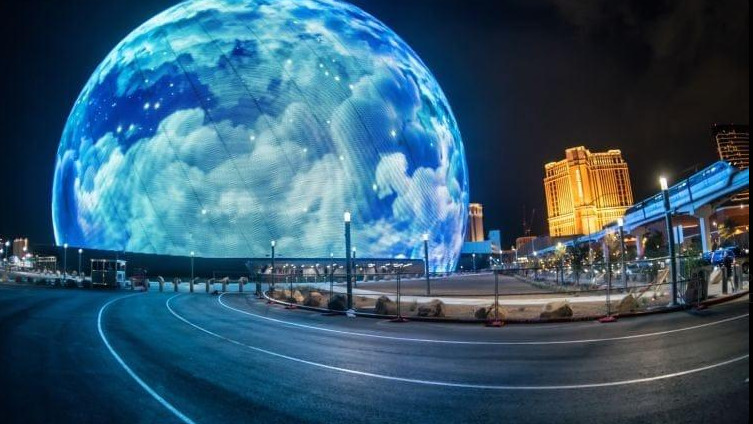
A wide nighttime view of the Las Vegas Sphere with the Exosphere completely illuminated. This should be your featured image, because readers immediately recognize the building and its enormous exterior LED display. Sphere says the Exosphere covers approximately 580,000 square feet and contains around 1.2 million LED pucks.
The Sphere Was Originally Supposed to Cost Around $1.2 Billion
The first major problem with the Las Vegas Sphere happened before anyone purchased a ticket.
The project became dramatically more expensive than originally anticipated.
Sphere Entertainment disclosed to investors that its preliminary construction estimate in May 2019 was approximately $1.2 billion.
That number eventually climbed.
And climbed again.
By 2023, Sphere Entertainment estimated the final construction cost at approximately $2.3 billion.
That made the Sphere one of the most expensive entertainment venues ever constructed.
The company attributed the increases partly to the project's complexity.
And that's understandable when you consider what Sphere Entertainment was actually building.
This wasn't simply another arena.
The Sphere required an enormous exterior LED system, an interior display wrapping around the audience, specialized sound systems, custom seating technology and an entirely new production ecosystem.
There wasn't exactly an instruction manual for building something like it.
Still, the economics changed dramatically when the cost increased from roughly $1.2 billion to $2.3 billion.
A venue costing $2.3 billion has to generate enormous amounts of money before investors can earn an attractive return on that investment.
That became the Sphere's fundamental financial problem.
Source:
https://www.sec.gov/Archives/edgar/data/1795250/000162828026007760/sphr-20251231.htm
Source:
https://www.sec.gov/Archives/edgar/data/1795250/000119312523140820/d420701dex991.htm
The Sphere Started Reporting Huge Losses
Once the venue opened, attention quickly shifted from construction costs to operating results.
And initially, those results didn't look particularly encouraging.
Sphere Entertainment's financial statements showed substantial operating losses associated with the Sphere business.
Even as revenue grew, enormous expenses remained.
For the twelve months ending December 31, 2025, Sphere Entertainment reported approximately $781.4 million in revenue from its Sphere segment.
That's an impressive amount of money.
But the same segment reported an operating loss of approximately $268.2 million.
That headline number makes the Sphere look like an obvious financial disaster.
But there is an important detail.
The Sphere segment recorded approximately $327.8 million in depreciation and amortization during the year.
Because the building and technology cost so much, accounting expenses associated with those assets are enormous.
When Sphere Entertainment excludes certain expenses to calculate adjusted operating income, the picture looks considerably different.
For 2025, the Sphere segment generated approximately $135.6 million in adjusted operating income.
So the Sphere simultaneously produced a large accounting operating loss and positive adjusted operating income.
That's why describing it simply as a "$268 million failure" misses part of the story.
It remains incredibly expensive.
But the underlying venue business has been improving.
Source:
https://www.sec.gov/Archives/edgar/data/1795250/000162828026007482/exhibit991sphereentertainm.htm
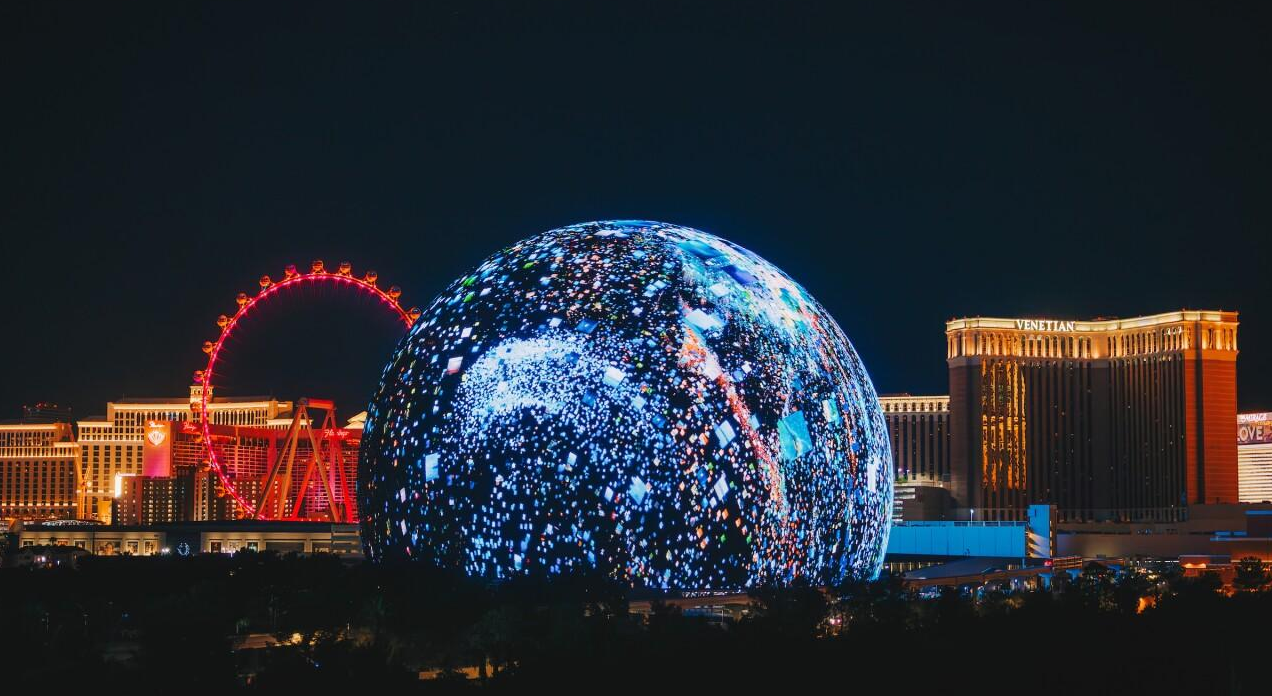
Use a skyline shot showing the Sphere alongside recognizable Las Vegas buildings. This provides context for just how dramatically the structure changed the city's skyline and supports the article's discussion of why Las Vegas was such a natural location for the first Sphere.
The Economics Were Brutal From Day One
The Sphere has a fundamental disadvantage compared with a normal arena.
A conventional arena is flexible.
One night it can host an NBA game.
The next night it can host a concert.
Then a comedy show.
Then wrestling.
Then a convention.
Then another concert.
Sphere doesn't work quite like that.
Its biggest competitive advantage—the gigantic immersive screen—is also one of its biggest limitations.
Artists can't simply arrive with the production they use at every other arena.
To take full advantage of Sphere, they need content specifically designed for its enormous display.
That takes time.
And money.
Potential performers therefore have to justify investing in visuals and production that might only work at one venue.
This is one reason Sphere has relied heavily on residencies rather than conventional one-night tour stops.
U2 opened the venue with U2 Achtung Baby Live at Sphere.
Phish followed.
Dead & Company became another major Sphere act.
Then came the Eagles.
Kenny Chesney.
Backstreet Boys.
The residency model makes sense because custom content can be reused across dozens of performances.
An artist spending heavily on Sphere-specific visuals might struggle to justify that investment for one concert.
Spread those costs across 20, 30 or 40 shows, however, and the economics become much more attractive.
Source:
https://www.sphereentertainmentco.com/
Source:
https://www.sec.gov/Archives/edgar/data/1795250/000162828026007760/sphr-20251231.htm
Sphere Needed Something to Do When There Wasn't a Concert
This created another problem.
What happens at 2 p.m. on a Tuesday when U2 isn't performing?
A $2.3 billion building can't simply sit empty.
Sphere Entertainment's answer was The Sphere Experience.
Instead of relying entirely on concerts, the company developed immersive films specifically for the venue.
The first major production was Darren Aronofsky's Postcard from Earth.
It could play multiple times every day, transforming the Sphere into something closer to a combination of an IMAX theater, theme-park attraction and concert venue.
That strategy has continued evolving.
Sphere added V-U2 An Immersive Concert Film, allowing audiences to experience a version of U2's Sphere production even when the band wasn't actually performing.
Then Sphere Entertainment made an even more interesting bet:
The Wizard of Oz at Sphere.
The classic film was transformed into an immersive Sphere experience using the venue's enormous screen and technology.
The strategy is crucial because original experiences can run hundreds of times.
According to Sphere Entertainment's 2025 annual filing, The Sphere Experience held 880 performances during the year.
Those included 494 performances of Postcard from Earth, 59 performances of V-U2 and 327 performances of The Wizard of Oz at Sphere.
In other words, Sphere isn't really trying to become an arena anymore.
It's becoming an immersive entertainment platform.
Source:
https://www.sec.gov/Archives/edgar/data/1795250/000162828026007760/sphr-20251231.htm
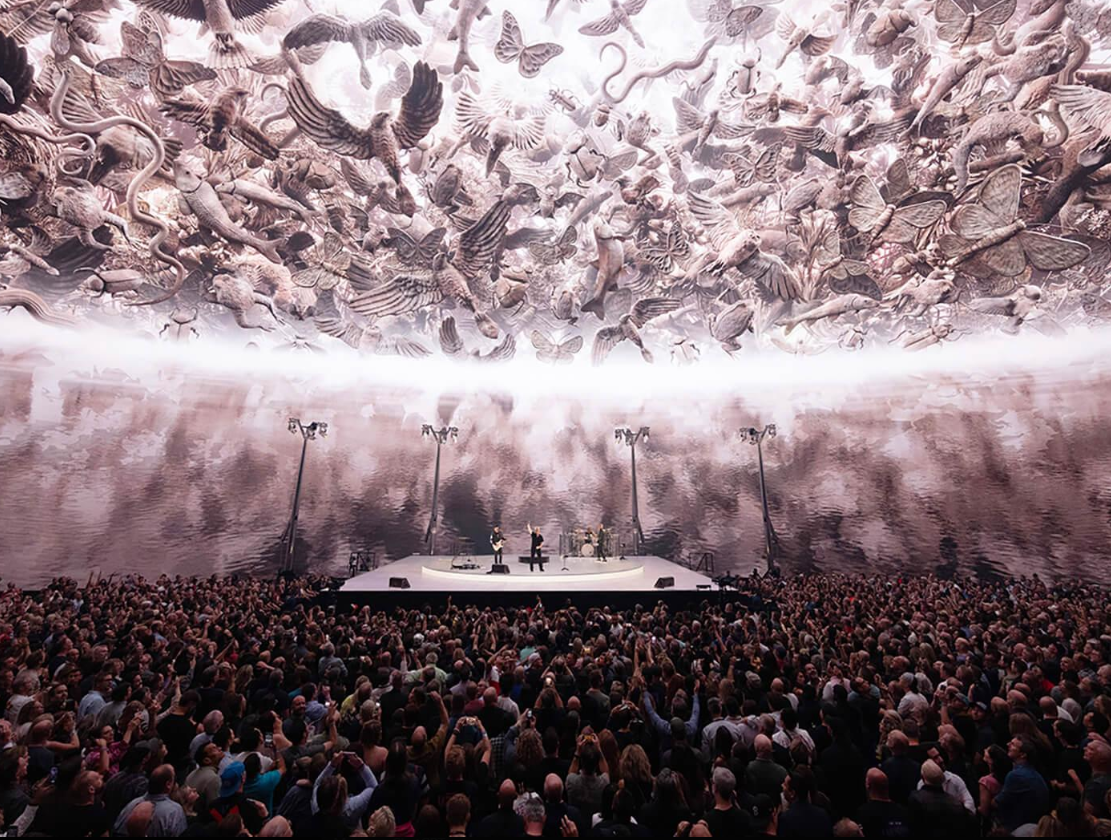
An interior photograph from U2's groundbreaking U2:UV Achtung Baby Live at Sphere residency. This is probably the most important interior image for the article because it demonstrates why the Sphere isn't simply another arena. The enormous display completely surrounds the performance and audience.
Then Something Important Happened: The Numbers Started Improving
If you only look at the Sphere's first year, the project appears much more disastrous than it does today.
By 2026, Sphere Entertainment's financial results were showing substantial improvement.
For the quarter ending March 31, 2026, Sphere Entertainment reported that the Sphere segment generated approximately $266 million in revenue.
That represented a 69% increase compared with approximately $157.5 million during the same quarter one year earlier.
Company-wide, Sphere Entertainment reported operating income of $7.2 million for the quarter compared with a $78.6 million operating loss during the previous-year quarter.
CEO James Dolan said the results demonstrated continued progress in proving the Sphere business model.
That doesn't erase the project's extraordinary construction cost.
And it certainly doesn't mean the original Sphere has already generated a satisfactory return on its $2.3 billion investment.
But it does change the narrative.
The Sphere isn't simply bleeding money while sitting half empty.
Sphere Entertainment has been learning how to operate it.
The Sphere Has Become One of the World's Highest-Grossing Venues
Here's another reason Sphere Entertainment isn't abandoning the concept:
People are buying tickets.
Sphere Entertainment said the Las Vegas venue ranked number one on Billboard and Pollstar's 2025 lists of top-grossing venues worldwide.
That's remarkable for a building that had only been operating for a little over two years.
It suggests the problem was never necessarily demand.
The problem was the enormous amount of capital required to create the building in the first place.
Once the Sphere exists, its ability to generate revenue can be extraordinary.
And that's the key distinction between "the Sphere doesn't work" and "the original Sphere cost too much."
Those are completely different problems.
If Sphere Entertainment can reproduce the experience without spending another $2.3 billion of its own money every time, suddenly the business model becomes considerably more interesting.
And that is exactly what the company is trying to do.
Choose an exterior photograph where the Sphere is displaying a particularly dramatic advertisement, artwork or animation.
Sphere Abu Dhabi Changes Everything
The next full-scale Sphere isn't planned for New York, Los Angeles or another American entertainment capital.
It's going to Abu Dhabi.
In May 2026, Sphere Entertainment and Abu Dhabi's Department of Culture and Tourism announced that Yas Island would become the location of Sphere Abu Dhabi.
The venue is expected to accommodate as many as 20,000 people.
Construction is targeted for completion by the end of 2029.
The estimated construction-phase investment?
$1.7 billion.
That's already substantially below the approximately $2.3 billion cost of the Las Vegas venue.
But the most important difference isn't the price.
It's who is paying for it.
The Department of Culture and Tourism – Abu Dhabi is investing the $1.7 billion required for the construction phase.
Under the broader partnership model previously announced, Abu Dhabi would pay Sphere Entertainment a franchise initiation fee for the rights to use Sphere's proprietary designs, technology and intellectual property.
Sphere Entertainment would provide expertise related to development, construction and pre-opening.
That changes the risk dramatically.
Instead of Sphere Entertainment spending another $2 billion-plus building a venue and hoping to earn the money back through tickets, another organization funds construction while Sphere monetizes its technology, brand and expertise.
That's much closer to a franchise or licensing model.
And suddenly, the Las Vegas Sphere's enormous cost starts looking less like a mistake and more like the research-and-development cost required to invent a new type of venue.
Then Came the Mini-Sphere
Sphere Entertainment learned another obvious lesson from Las Vegas:
Maybe every Sphere doesn't need 20,000 seats.
In 2025, the company began publicly discussing smaller Sphere venues capable of accommodating approximately 5,000 people.
Then, in January 2026, those plans became much more concrete.
Sphere Entertainment, Maryland, Prince George's County and Peterson Companies announced plans for a smaller Sphere at National Harbor, outside Washington, D.C.
The proposed venue would have approximately 6,000 seats.
Despite being much smaller than Las Vegas, it would retain the fundamental Sphere experience.
The plans include an Exosphere exterior display, a 16K × 16K interior display, Sphere Immersive Sound, haptic seating and 4D environmental effects.
The project would also potentially receive approximately $200 million in state, local and private incentives, although construction remains subject to definitive agreements, approvals and incentives.
A smaller Sphere could solve several problems simultaneously.
Construction should be cheaper.
Operating costs should be lower.
Fewer tickets need to be sold.
Smaller artists could potentially fill the venue.
And immersive productions developed for the Sphere network could theoretically travel between multiple locations.
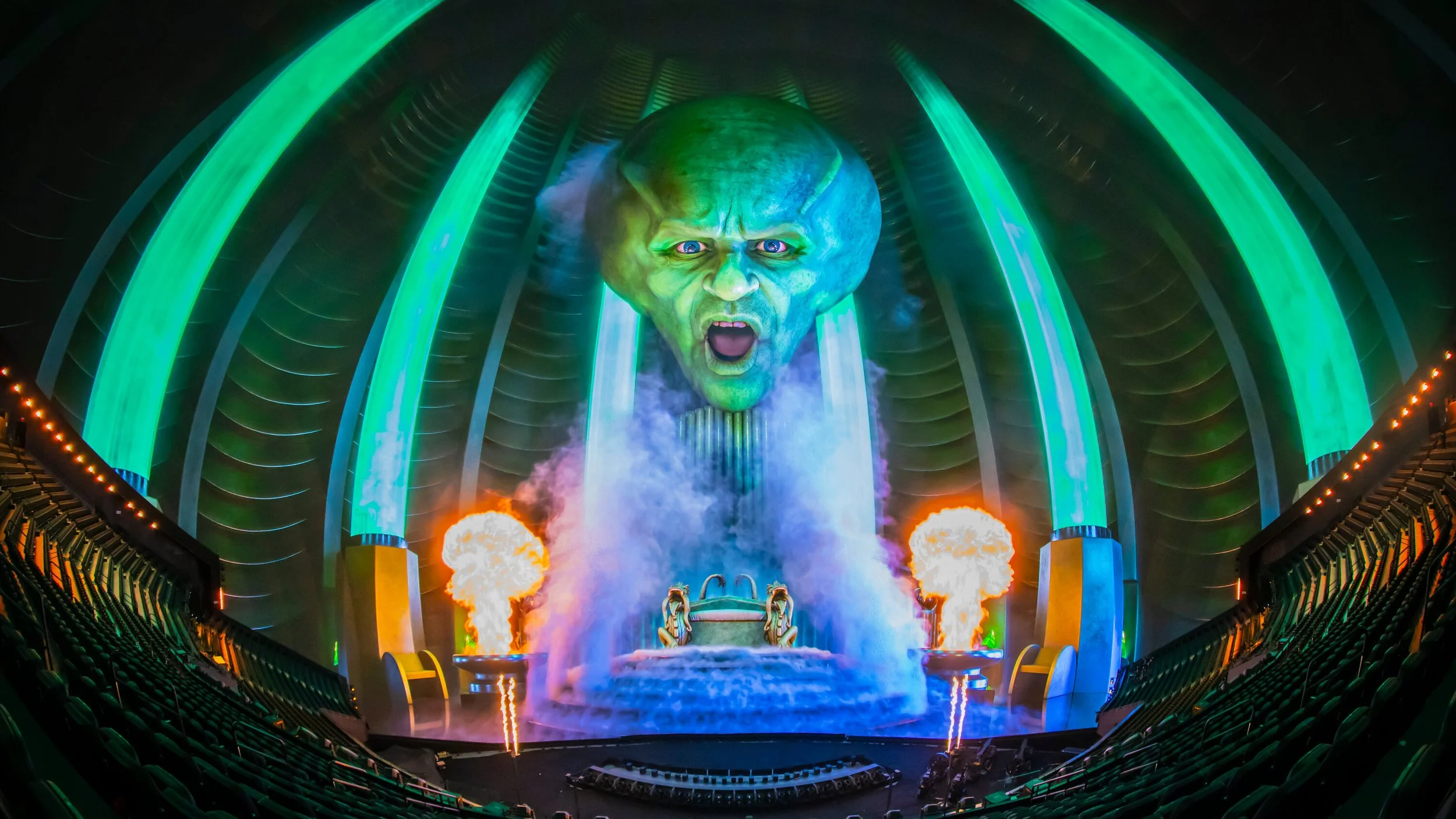
Use an official promotional image showing The Wizard of Oz at Sphere filling the enormous interior screen.
The Secret Isn't More Spheres — It's a Sphere Network
This may ultimately be the most important part of the entire strategy.
The Las Vegas Sphere currently has a huge disadvantage:
Content developed specifically for it has limited places to go.
Imagine spending millions creating an immersive movie that only one building on Earth can properly display.
That's risky.
Now imagine there are 10 Spheres.
Or 20.
Suddenly the same piece of content can be distributed globally.
A Sphere film could premiere in Las Vegas and later play in Abu Dhabi, Washington, and potentially future locations around the world.
Concert productions could work similarly.
An artist could develop one enormous immersive production and perform residencies at several Spheres.
Advertising could potentially become a network as well.
Instead of buying the Exosphere in Las Vegas, a global company could theoretically run coordinated campaigns across multiple Sphere locations.
The economics improve as the network grows.
That's why Sphere Entertainment repeatedly describes its ambition as creating a global network of Sphere venues.
Las Vegas wasn't necessarily supposed to be the entire business.
It was the prototype.
Source:
https://www.sec.gov/Archives/edgar/data/1795250/000162828026007760/sphr-20251231.htm
But London Shows Why This Strategy Could Still Fail
Not every city wants a giant glowing ball.
Sphere Entertainment previously attempted to build a Sphere in Stratford, East London.
The proposal faced substantial opposition.
Critics were concerned about the building's enormous exterior LED display, particularly the potential impact of light on surrounding homes.
In November 2023, London Mayor Sadiq Khan rejected the proposal, citing concerns including significant light intrusion and harm to nearby residents.
Sphere Entertainment ultimately withdrew the proposal in early 2024.
London demonstrates one of the biggest obstacles facing a global Sphere network.
Las Vegas is almost uniquely suited to the concept.
The city already embraces enormous signs, casinos, entertainment venues and illuminated buildings.
Put the same glowing structure next to residential neighborhoods in another city and public reaction can be completely different.
Future Spheres therefore have to overcome planning restrictions, neighborhood opposition, infrastructure requirements and environmental concerns.
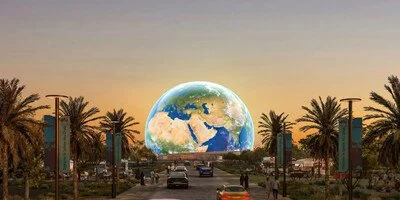
An official architectural visualization of Sphere Abu Dhabi on Yas Island. This is arguably the second-most-important image after your hero shot because it visually answers the title's question: If Las Vegas struggled financially, why are they building more?
So, Did the Las Vegas Sphere Actually Fail?
Financially, the answer depends on what you mean by "failed."
If the argument is that the Sphere cost dramatically more than originally expected, then yes—the construction economics were far worse than planned.
An early estimate of approximately $1.2 billion eventually became roughly $2.3 billion.
If the argument is that the Sphere has reported huge accounting losses, that's also true.
The Sphere segment reported an operating loss of approximately $268 million in 2025.
But if "failed" means people don't want to visit it, the evidence points in the opposite direction.
Sphere has become one of the world's highest-grossing entertainment venues.
Its revenue has grown.
Its adjusted operating performance has improved.
Concert residencies continue attracting major performers.
The company has found ways to use the venue throughout the day through Sphere Experiences.
And as of 2026, the business is still evolving rapidly.
The Las Vegas Sphere may therefore be better described as an extraordinarily expensive prototype rather than an outright failure.
Why Build More?
Because the second Sphere doesn't have to repeat the mistakes of the first.
Sphere Entertainment now knows how to design the building.
It knows how to operate the technology.
It has artists who understand the format.
It has existing immersive content.
It has advertisers familiar with the Exosphere.
It has years of real-world operational data.
And most importantly, it has partners willing to help pay for future venues.
Abu Dhabi represents the large-scale partnership model.
National Harbor represents the smaller-scale model.
If both work, Sphere Entertainment could potentially expand without repeatedly taking on the same financial risk it accepted in Las Vegas.
That's the real strategy.
The company isn't simply building more $2.3 billion Las Vegas Spheres and hoping things go better.
It's changing the economics.
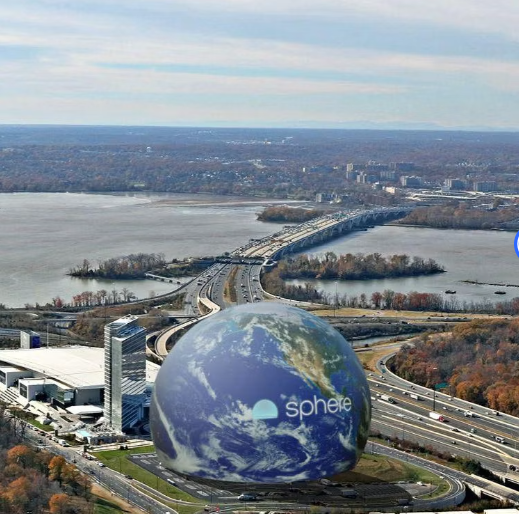
Finish with the proposed 6,000-seat Sphere at National Harbor, Maryland, outside Washington, D.C.
The Las Vegas Sphere May Have Been the World's Most Expensive Prototype
The strangest thing about the Sphere story is that its biggest weakness could ultimately become its greatest advantage.
Las Vegas absorbed the enormous cost of figuring out how to build this thing.
It proved that a gigantic LED-covered sphere could actually operate.
It proved artists could create concerts for it.
It proved audiences would travel to experience it.
It proved brands would advertise on it.
And it revealed the problems Sphere Entertainment now has to solve.
The company learned that $2.3 billion is an extraordinary amount to spend on one venue.
It learned that artists need reasons to invest in custom content.
It learned that the building needs programming during non-concert hours.
It learned that not every city will tolerate an enormous illuminated Exosphere.
And it learned that future expansion needs a less capital-intensive business model.
Now comes the real experiment.
Sphere Abu Dhabi is expected to take the concept international.
National Harbor could prove whether a 6,000-seat Sphere can work in markets that could never support a Las Vegas-sized venue.
And if Sphere Entertainment eventually creates a genuine network, the content economics could completely change.
A movie developed for one Sphere is expensive.
A movie developed for 20 Spheres is intellectual property.
A concert designed for one building is a costly residency.
A concert designed for a worldwide network becomes a tour.
A giant LED billboard in Las Vegas is advertising.
A network of giant LED landmarks around the world becomes a global media platform.
That's why they're building more.
The Las Vegas Sphere hasn't proven that spending $2.3 billion on an entertainment venue is a brilliant investment.
Far from it.
What it may have proven is something potentially much more valuable:
The Sphere itself works.
Now Sphere Entertainment has to figure out how to make the economics work with it.
And if Abu Dhabi and the smaller National Harbor Sphere succeed, Las Vegas may eventually be remembered not as the Sphere that failed—
but as the extremely expensive prototype that created an entirely new category of entertainment venue.
Sources
Sphere Entertainment Co. – 2025 Annual Report / Form 10-K
https://www.sec.gov/Archives/edgar/data/1795250/000162828026007760/sphr-20251231.htm
Sphere Entertainment Co. – 2025 Financial Results
https://www.sec.gov/Archives/edgar/data/1795250/000162828026007482/exhibit991sphereentertainm.htm
Sphere Entertainment Co. – Las Vegas Sphere Construction Cost Update
https://www.sec.gov/Archives/edgar/data/1795250/000119312523140820/d420701dex991.htm
Sphere Entertainment Co. – First Quarter 2026 Results
https://investor.sphereentertainmentco.com/press-releases/news-details/2026/Sphere-Entertainment-Co--Reports-First-Quarter-2026-Results/default.aspx
Sphere Entertainment Co. – Second Quarter 2026 Results
https://investor.sphereentertainmentco.com/press-releases/news-details/2026/Sphere-Entertainment-Co--Reports-Second-Quarter-2026-Results/default.aspx
Sphere Entertainment Co. – Sphere Abu Dhabi at Yas Island
https://www.sphereentertainmentco.com/yas-island-to-be-home-of-sphere-abu-dhabi-a-new-global-icon-for-immersive-entertainment/
Sphere Entertainment Co. – Abu Dhabi Sphere Partnership
https://investor.sphereentertainmentco.com/press-releases/news-details/2024/SPHERE-ENTERTAINMENT-AND-THE-DEPARTMENT-OF-CULTURE-AND-TOURISM---ABU-DHABI-ANNOUNCE-PLANS-TO-MAKE-ABU-DHABI-NEXT-SPHERE-VENUE-LOCATION/default.aspx
Sphere Entertainment Co. – National Harbor Sphere Announcement
https://www.sphereentertainmentco.com/sphere-entertainment-the-state-of-maryland-prince-georges-county-and-peterson-companies-announce-intent-to-develop-a-sphere-at-national-harbor/
Euronews – Why Plans for a London Sphere Were Withdrawn
https://www.euronews.com/culture/2024/01/10/why-has-msg-axed-plans-to-build-a-vegas-style-sphere-in-london
The Washington Post – Mini-Sphere Planned for Washington, D.C. Region
https://www.washingtonpost.com/entertainment/2026/01/18/minisphere-dc-
