

Bishoftu International Airport: Ethiopia Is Building Africa’s Biggest Airport
Africa is about to get an airport on a scale the continent has never seen before.
About 40 kilometers outside Addis Ababa, Ethiopia has officially started construction on Bishoftu International Airport (BIA), a massive new aviation hub being developed primarily to support the extraordinary growth of Ethiopian Airlines.
The numbers behind the project are enormous.
Bishoftu International Airport is expected to cost approximately $12.5 billion, with its first phase designed for around 60 million passengers per year. Eventually, the airport's master plan calls for capacity to reach 110 million passengers annually, supported by four runways and parking positions for as many as 270 aircraft.
If those plans are fully realized, Bishoftu won't simply become Ethiopia's largest airport.
It is expected to become the largest airport in Africa by passenger capacity and one of the world's major international aviation hubs.
Construction officially commenced on January 10, 2026, putting one of Africa's most ambitious infrastructure projects into motion.
And behind the futuristic terminal is one of the world's most recognizable architecture studios: Zaha Hadid Architects.
So why is Ethiopia building an airport this enormous?
The answer has almost everything to do with Ethiopian Airlines—and its ambition to transform Addis Ababa into one of the world's great connecting hubs.
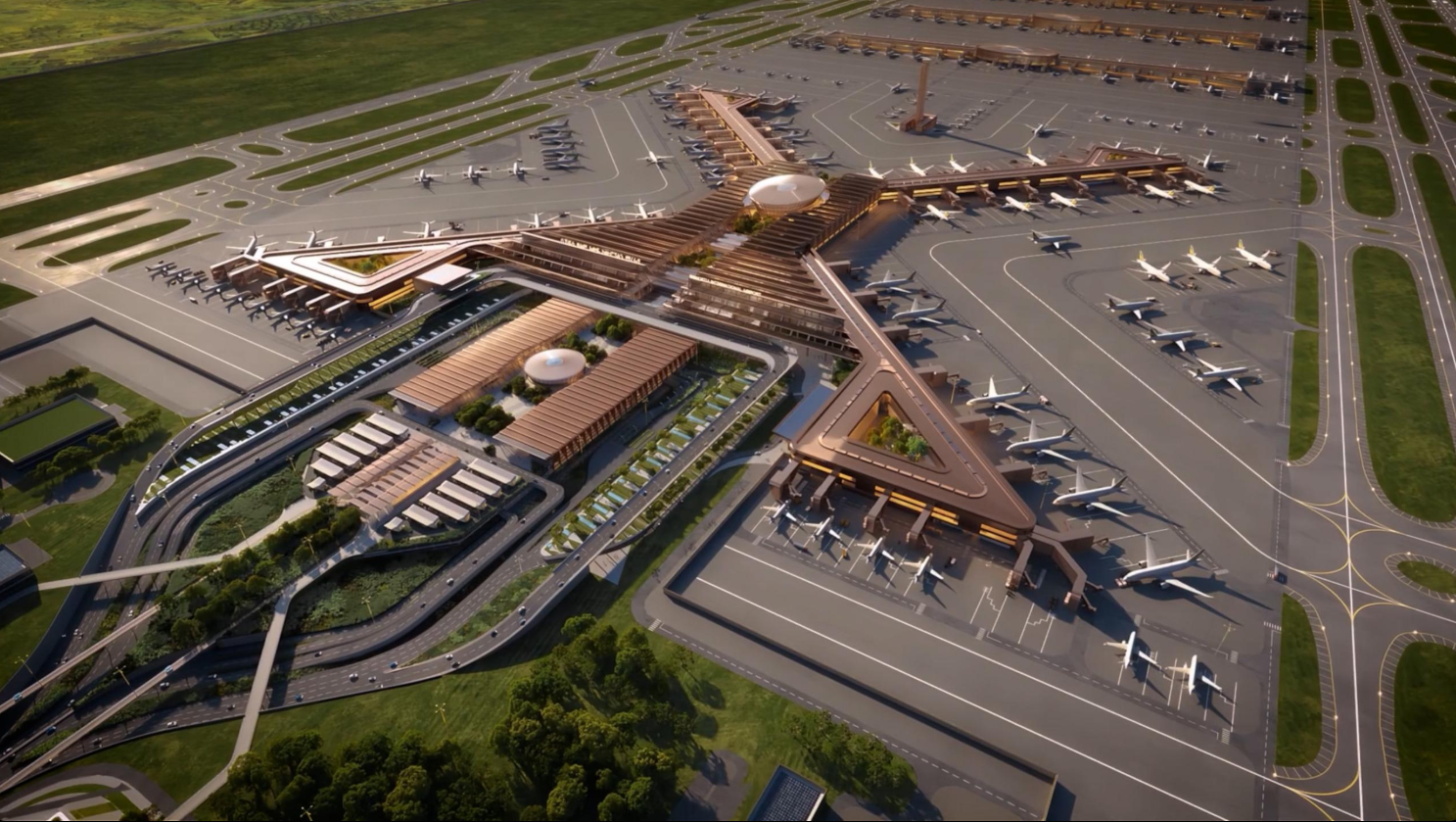
A dramatic aerial view showing BIA's enormous terminal complex, aircraft gates, taxiways and surrounding infrastructure. This is the best featured image for the article because it immediately communicates the extraordinary scale of the project.
Addis Ababa Has a Problem: Ethiopian Airlines Is Outgrowing Its Airport
To understand Bishoftu International Airport, you first have to understand what is happening at Addis Ababa Bole International Airport.
Bole is currently Ethiopia's primary international gateway and the main hub for Ethiopian Airlines.
For years, Ethiopia has invested in expanding the airport.
But there is a fundamental problem.
Ethiopian Airlines continues to grow.
According to Ethiopian Airlines, Bole International Airport is expected to approach its expanded annual capacity of roughly 25 million passengers.
At some point, continuing to expand the existing airport becomes increasingly difficult.
Airports require enormous amounts of land.
Runways need huge safety zones. Terminals need space. Taxiways, maintenance facilities, cargo buildings, aircraft parking, roads and public transportation all require additional land.
Once an airport becomes surrounded by a growing city, expansion can become extraordinarily complicated and expensive.
Ethiopian Airlines therefore decided on a different solution:
Build another airport.
Not just a secondary airport, either.
Build an entirely new global hub capable of handling more than four times Bole's eventual passenger capacity.
The result is Bishoftu International Airport.
Where Is Bishoftu International Airport Being Built?
The new airport is being developed near Abusera, within the Bishoftu area, roughly 40 kilometers from Addis Ababa.
The location wasn't selected purely because there was enough land available.
Altitude played an important role.
Addis Ababa is one of the highest major capital cities in the world, and Bole International Airport sits at an elevation of roughly 2,300 meters.
High altitude creates challenges for aircraft.
Air becomes less dense as elevation increases. Combined with warm temperatures, this can affect aircraft takeoff performance and potentially limit the amount of passengers, cargo or fuel an aircraft can carry under certain conditions.
The Bishoftu site sits at approximately 1,910 meters above sea level.
That's still a high-elevation airport, but significantly lower than Bole.
Ethiopian Airlines specifically identified altitude as an important consideration during the airport's site-selection process because of its impact on aircraft payload-range performance.
That could be particularly valuable for Ethiopian Airlines' long-haul network.
The location is also close enough to Addis Ababa to remain integrated with the capital and Ethiopia's existing aviation infrastructure.
Source:
https://www.gcs.gov.et/en/2026/01/10/official-message-from-prime-minister-abiy-ahmed-ph-d/

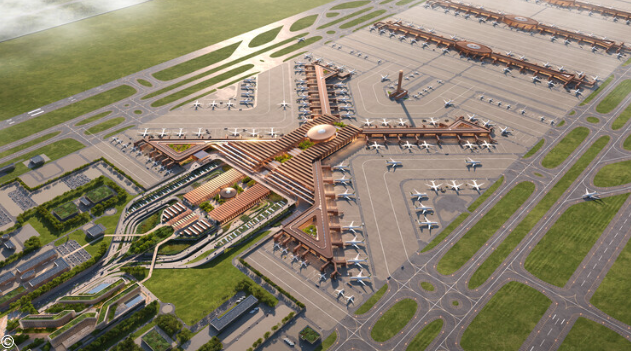
A wide aerial rendering showing how the terminal, runways, taxiways and surrounding airport infrastructure fit together. This would be ideal for the section discussing BIA's eventual four runways, 270 aircraft parking positions and 110-million-passenger capacity.
Phase One Will Handle 60 Million Passengers
Bishoftu International Airport won't reach its ultimate size immediately.
Instead, the project is being developed in phases.
The first phase is expected to provide capacity for approximately 60 million passengers every year.
For perspective, that alone would make Bishoftu one of the most important airports on the African continent.
But 60 million isn't the final target.
The long-term master plan increases capacity to approximately:
110 million passengers per year.
That number puts Bishoftu into an entirely different category.
Airports handling more than 100 million annual passengers belong to an extremely small global club.
The ultimate airport is expected to feature four runways and parking for approximately 270 aircraft.
Zaha Hadid Architects says the airport's first phase will accommodate 60 million passengers annually, while future phases will expand the complex to its ultimate 110-million-passenger capacity.
Source:
https://www.zha.com/projects/architecture/bishoftu-international-airport
Four Runways Could Make Bishoftu an Aviation Machine
One of Bishoftu's most important features won't be the terminal.
It will be the runways.
The first phase of the project is planned around two parallel runways.
Eventually, the airport is designed to have four runways.
That matters because runway capacity can become one of the biggest bottlenecks at a major international airport.
You can keep expanding terminals, but if aircraft cannot efficiently take off and land, the airport eventually reaches an operational ceiling.
A properly designed multi-runway system allows airports to process enormous numbers of aircraft movements.
Dar Al-Handasah, the project's lead consultant, says the development will include extensive airfield infrastructure alongside passenger facilities, cargo and logistics areas, airline support facilities, utilities and transportation connections.
The ultimate result is intended to function less like a conventional airport and more like a complete aviation ecosystem.
Source:
https://www.zha.com/projects/architecture/bishoftu-international-airport
Architectural rendering highlighting the futuristic terminal design. Use this image when introducing Zaha Hadid Architects and explaining how the architecture is intended to give Ethiopia's enormous new aviation hub its own identity.
Zaha Hadid Architects Is Designing the Airport
The scale of Bishoftu is impressive.
But its architecture could make the airport equally recognizable.
Ethiopian Airlines initially selected Dar Al-Handasah Consultants for technical advisory and consultancy services on the airport development.
Dar leads a multidisciplinary team that includes Zaha Hadid Architects, Pascall+Watson Architects, Landrum & Brown, TYLin, Penspen and Introba.
Zaha Hadid Architects developed the architectural concept for major portions of the project, including the passenger terminal, concourse, ground transportation center, control tower and Airport City.
According to Dar, the design draws inspiration from Ethiopia's landscape, culture and climate.
That's significant.
Mega-airports can easily become enormous anonymous spaces.
Passengers move through kilometers of corridors, trains and concourses without having much sense of where they actually are.
Bishoftu's architects are instead attempting to give the airport a distinctly Ethiopian identity while simultaneously designing it around the practical requirements of an enormous connecting hub.
The Terminal Is Being Designed Around Connecting Passengers
Bishoftu isn't simply being built for people traveling to Ethiopia.
Its bigger role will be connecting passengers traveling through Ethiopia.
That distinction explains much of the project's design.
Ethiopian Airlines operates an enormous international network connecting African cities with Europe, Asia, the Middle East and the Americas.
A passenger might fly from one African country into Addis Ababa, transfer, and then continue toward Europe or Asia.
The airport therefore needs to process transfers extremely efficiently.
Zaha Hadid Architects says Bishoftu has a strong focus on transferring passengers.
Rather than treating connections as an afterthought, the airport is being designed around Ethiopian Airlines' hub-and-spoke network from the beginning.
That could potentially reduce connection times while allowing Ethiopian Airlines to schedule large banks of arriving and departing flights.
For Ethiopian Airlines, that's essential.
The airline isn't merely building a bigger home.
It's building infrastructure around its future business model.
Source:
https://www.zha.com/projects/architecture/bishoftu-international-airport

A rendering showing the huge passenger hall with high ceilings, columns, natural light and warm interior materials. This is a strong choice for the section explaining how BIA is being designed around passenger transfers.
The interior design uses different materials and color palettes to reference Ethiopia's regions, while the airport's central circulation concept takes inspiration from the nearby Great Rift Valley
Ethiopian Airlines Wants to Become Even Bigger
Bishoftu makes more sense when viewed alongside Ethiopian Airlines' growth ambitions.
The airline already operates one of Africa's most extensive international networks.
But its long-term strategy calls for significantly more growth.
Dar says the airport development will support ambitions that include increasing Ethiopian Airlines' fleet toward 270 aircraft, serving more than 200 international destinations and expanding cargo capacity.
That requires enormous infrastructure.
More airplanes require more gates.
More passengers require larger terminals.
More destinations require additional connection capacity.
More cargo requires warehouses, aircraft stands and logistics infrastructure.
Eventually, the physical limits of Bole International Airport would begin limiting the airline itself.
Bishoftu removes that ceiling.
Instead of asking, "How much more can we squeeze into the existing airport?" Ethiopian Airlines can design infrastructure around where it expects the company to be decades from now.
Bishoftu Will Also Be a Massive Cargo Hub
Passengers are only one part of the equation.
Cargo is another major component of Ethiopian Airlines' business.
The airport's long-term development includes enormous cargo and logistics facilities.
During financing discussions in 2025, Ethiopian aviation officials described plans for cargo capacity beginning at approximately 2.1 million tons, potentially increasing to roughly 3.73 million tons as the airport develops.
That could make Bishoftu an extraordinarily important logistics gateway.
Ethiopia's geographic location gives it an interesting advantage.
From Addis Ababa, airlines can connect markets across Africa while also reaching major commercial centers in Europe, Asia and the Middle East.
A huge cargo hub could therefore serve not only Ethiopian imports and exports but also connecting freight moving across the continent.

Rendering of one of the airport's landscaped passenger spaces. This gives your article some visual variety instead of using eight exterior shots.
It's particularly relevant because BIA is planned with outdoor gardens and courtyards for connecting passengers, along with dining, entertainment and a 350-room airside hotel.
This Isn't Just an Airport — It's an Airport City
Perhaps the biggest misconception about Bishoftu is thinking of it purely as a terminal surrounded by runways.
The development is being planned as an Airport City.
Hotels, commercial areas, business facilities, transportation infrastructure and other developments are expected to surround the aviation complex.
Dar says the project will include integrated road and rail connections to Addis Ababa.
That transportation link will be critical.
Moving 60 million—and eventually potentially 110 million—passengers through an airport means moving enormous numbers of people to and from the airport every day.
Roads alone can struggle under that volume.
Rail connectivity could allow passengers, airport employees and potentially travelers connecting between Bole and Bishoftu to move more efficiently.
If everything envisioned in the master plan is built, Bishoftu could effectively create an entirely new economic district outside Addis Ababa.
The Price Tag: Around $12.5 Billion
Building Africa's largest airport isn't cheap.
The first phase of Bishoftu International Airport is currently estimated at approximately $12.5 billion.
Financing a project of that size is almost as complicated as designing it.
The African Development Bank has become one of the key financial institutions involved.
In August 2025, Ethiopian Airlines and the AfDB signed a mandate letter appointing the bank as the initial mandated lead arranger for financing the airport.
The AfDB said it would provide a $500 million loan while helping mobilize additional financing.
Reuters reported in January 2026 that Ethiopian Airlines intended to finance roughly 30% of the project while international lenders would provide the remainder.
The scale of the financing demonstrates just how important the project is to Ethiopia's long-term economic strategy.
This isn't a normal terminal expansion.
It's a national-scale infrastructure investment.

An interior visualization showing seating, greenery and the large flowing roof structure above the passenger areas. This is perfect for discussing BIA's unusual emphasis on transfer passengers. Up to 80% of passengers are expected to be connecting through the airport, according to ZHA.
Construction Officially Started in January 2026
For years, Bishoftu existed largely as plans, studies and renderings.
That changed on January 10, 2026.
Ethiopian Airlines announced the official commencement of construction following a groundbreaking ceremony attended by Ethiopian Prime Minister Abiy Ahmed, government officials, industry representatives and Ethiopian Airlines executives.
The airport's design was also formally unveiled.
Reuters reported that earthworks valued at approximately $610 million were underway, with major construction activity expected to accelerate during 2026.
The current target is for the first phase to be completed around 2030, although some earlier project schedules discussed phased opening beginning in late 2029.
As with any infrastructure project this large, timelines can change.
But Bishoftu has now crossed the important line separating a proposed megaproject from one actually entering construction.
Thousands of People Have Been Affected by the Project
A development covering this much land inevitably has consequences for communities already living there.
The African Development Bank stated during the project's financing process that approximately 2,800 households were affected by relocation associated with the airport.
Ethiopian Airlines has said that a resettlement and livelihood restoration program was completed for affected communities before the official construction commencement.
That social impact is an important part of the Bishoftu story.
Mega infrastructure projects are often presented through spectacular renderings, passenger-capacity statistics and promises of economic growth.
But creating them can fundamentally reshape existing communities and landscapes.
The airport's long-term success therefore shouldn't be judged solely by how many passengers it handles. How effectively relocation, compensation, livelihoods and surrounding development are managed will also matter.

A real photograph from the January 10, 2026 groundbreaking, rather than a rendering. It shows Ethiopian Prime Minister Abiy Ahmed and officials marking the beginning of construction.
Could Bishoftu Become the "Dubai of Africa"?
The comparison with Dubai is difficult to avoid.
Dubai International became one of the world's most important aviation hubs partly because Emirates used Dubai's geographic position to connect passengers between continents.
Ethiopian Airlines is pursuing a concept with similarities, although within a very different economic and geographic environment.
Addis Ababa is well positioned for connecting large parts of Africa with Europe, Asia and the Middle East.
Instead of every passenger beginning or ending their trip in Ethiopia, millions could simply transfer there.
That can transform an airport into something much larger than local demand would otherwise support.
In July 2026, Reuters reported growing international interest in the $12.5 billion project, including efforts by the United States to secure opportunities for American companies.
The same report noted the ambition to turn the project into something resembling a "Dubai of Africa."
Whether Bishoftu ultimately reaches that level is impossible to know.
But the strategy is clear.
Ethiopia isn't building Bishoftu simply because it needs another airport.
It's building infrastructure designed to compete for global connecting traffic.
Why Bishoftu International Airport Matters
Bishoftu International Airport could become one of the most consequential infrastructure projects Africa has built in decades.
At full development, the numbers are remarkable:
60 million passengers annually in the first phase.
110 million passengers at ultimate capacity.
Four runways.
Parking for approximately 270 aircraft.
Massive cargo infrastructure.
Road and rail connections.
An entire Airport City.
And an estimated investment of roughly $12.5 billion for the first phase.
But those numbers only tell part of the story.
Bishoftu represents something much larger: Ethiopia betting that aviation can become one of the country's greatest strategic advantages.
Ethiopian Airlines has already demonstrated that an African airline can build a genuinely global network.
Now Ethiopia is attempting to give that airline infrastructure on the same scale as its ambitions.
There are still enormous challenges ahead.
Billions of dollars must be financed. Complex engineering has to be completed. Transportation connections must be constructed. Communities affected by the project need continued support. And passenger demand ultimately has to justify an airport capable of handling more than 100 million travelers every year.
But if Bishoftu reaches its planned scale, the geography of African aviation could look very different.
For decades, many journeys between African cities—or between Africa and other continents—have depended heavily on hubs outside the continent.
Bishoftu is an attempt to change that equation.
Instead of Africa's next major global aviation hub being built somewhere else, Ethiopia wants it built just outside Addis Ababa.
And with construction now underway, Bishoftu International Airport is no longer just an ambitious rendering.
It is becoming real.
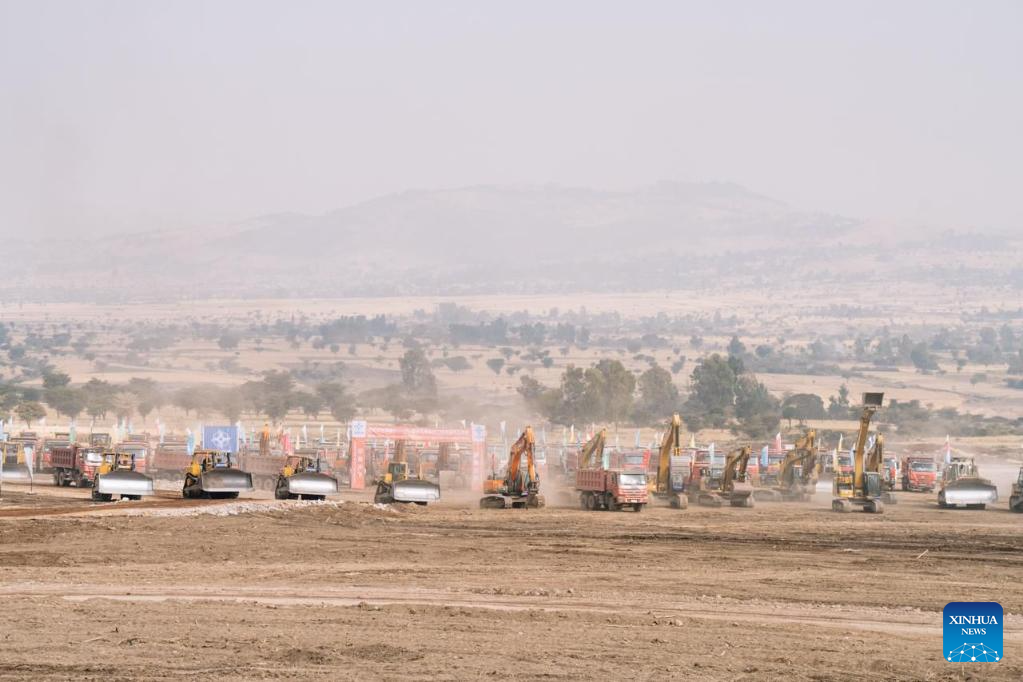
A real-world photograph of the BIA construction site near Bishoftu. This is the image I'd use near the "Construction Officially Started in January 2026" section of your article.
It creates a useful contrast with the polished architectural renderings and shows readers what the project actually looks like during its early construction phase. Xinhua documented the construction site on January 10, 2026, when the project was officially launched.
Sources
Ethiopian Airlines – Bishoftu International Airport Groundbreaking
https://corporate.ethiopianairlines.com/Press-release-open-page/ethiopian-airlines-marks-the-groundbreaking-of-bishoftu-international-airport-construction
Ethiopian Airlines – Shaping Africa's New Aviation Gateway: Bishoftu International Airport
https://corporate.ethiopianairlines.com/Press-release-open-page/shaping-africa-s-new-aviation-gateway-the-bishoftu-international-airport
Ethiopian Airlines – Bishoftu International Airport Factsheet
https://corporate.ethiopianairlines.com/docs/default-source/ethiopian-factsheet/fact-sheet-bishoftu-international-airport-english-version-i.pdf
Ethiopian Airlines – Dar Al-Handasah Mega Airport City Contract
https://corporate.ethiopianairlines.com/Press-release-open-page/ethiopian-airlines-signs-a-contract-with-dar-al-handasah-to-develop-a-mega-airport-city
Ethiopian Airlines – African Development Bank Financing Agreement
https://corporate.ethiopianairlines.com/Press-release-open-page/ethiopian-airlines-group-and-african-development-bank-sign-a-mandate-letter-for-financing-africa-s-largest-aviation-infrastructure-project
Zaha Hadid Architects – Bishoftu International Airport
https://www.zha.com/projects/architecture/bishoftu-international-airport
Dar Al-Handasah – Construction Commences on Bishoftu International Airport
https://www.dar.com/news/details/construction-commences-on-ethiopia%E2%80%99s-new-bishoftu-international-airport-africa%E2%80%99s-largest-and-most-ambitious-upcoming-airport-
African Development Bank – Bishoftu International Airport Project
https://www.afdb.org/en/documents/ethiopia-bishoftu-international-airport-project-p-et-da0-013
African Development Bank – Bishoftu Airport Financing Partnership
https://www.afdb.org/en/news-and-events/press-releases/10-billion-mega-airport-financing-partnership-between-ethiopian-airlines-and-african-development-bank-takes-85992
Government Communication Service of Ethiopia – Official Message on Bishoftu International Airport
https://www.gcs.gov.et/en/2026/01/10/official-message-from-prime-minister-abiy-ahmed-ph-d/
Reuters – Ethiopia Begins $12.5 Billion Construction of Africa's Biggest Airport
https://www.reuters.com/world/africa/ethiopia-begins-125-billion-construction-africas-biggest-airport-2026-01-10/
Reuters – U.S. Seeks Role in Ethiopian Airlines' $12.5 Billion Airport Project
https://www.reuters.com/world/africa/us-seeks-role-ethiopian-airlines-125-billion-airport-project-2026-07-29/
