

Westminster Palace Renovations 2026: Britain Moves Closer to a Historic Rebuild
By BuildBrief News Desk
LONDON — After years of surveys, emergency repairs, political debate and rising maintenance costs, the enormous task of restoring the Palace of Westminster entered a consequential new phase in 2026. The home of the House of Commons and House of Lords remains one of Britain's most recognizable buildings, but behind its Gothic Revival stonework sits an aging network of electrical systems, plumbing, ventilation equipment and other infrastructure increasingly difficult to maintain.
In February 2026, Parliament's Restoration and Renewal Client Board published long-awaited costed proposals outlining how the Palace of Westminster could be restored. Rather than immediately committing Parliament to one construction strategy for the entire project, the recommendations call for an initial seven-year package of "phase one works," currently estimated at up to £3 billion excluding inflation.
The proposal represents one of the clearest attempts yet to move the Westminster restoration from years of planning toward physical construction.
According to UK Parliament, the first phase could include temporary parliamentary accommodation, preparations for restoring the medieval Cloister Court, internal refurbishment of Victoria Tower, underground construction and a river jetty that could eventually be used for construction deliveries.
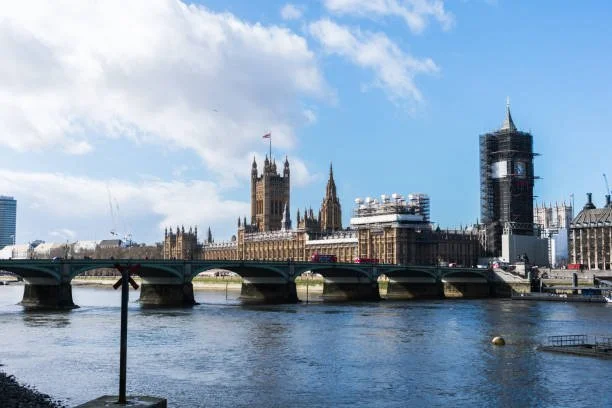
The combination of historic Gothic Revival architecture and modern scaffolding visually reinforces the central theme of the article: Britain is preparing for an extraordinarily complicated restoration of a functioning national landmark.
Why Westminster Needs Such a Massive Renovation
The scale of the Palace of Westminster renovation is difficult to understand from the building's exterior. Visitors see one of London's defining landmarks stretching along the River Thames. Construction teams see a historic complex where Victorian architecture must coexist with the requirements of a modern legislature.
Parliament says the Restoration and Renewal Programme is responsible for planning the extensive work necessary to refurbish the Palace. The modern effort dates back more than a decade, with the House of Commons Commission and House of Lords Commission recognizing in 2012 that substantial modernization was necessary.
The condition figures published with the 2026 proposals help explain the urgency. Parliament reported 36 fire incidents, 12 asbestos incidents and 19 stonemasonry incidents since 2016. Meanwhile, approximately £1.5 million is being spent every week maintaining and repairing the Palace.
Accessibility is another major problem. Only about 12% of the Palace's total floor area currently provides step-free access, illustrating how dramatically a nineteenth-century building must change if it is to function as a modern public workplace.
Source: https://publications.parliament.uk/pa/jt5901/jtselect/jtrandrcb/1576/report.html
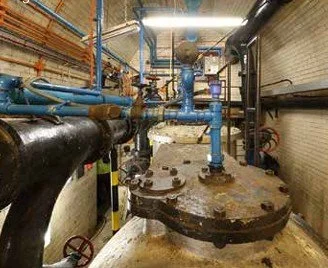
While Westminster's exterior remains internationally recognizable, the basement reveals the ageing infrastructure driving the Restoration and Renewal Programme. Corroded equipment, densely packed pipes and decades of accumulated building services demonstrate why the project extends far beyond repairing stonework.
A £3 Billion First Phase
Instead of asking lawmakers to approve the entire restoration in one decision, the 2026 strategy breaks the project into stages. Phase one would cover up to seven years of expenditure and carry a funding commitment capped at £3 billion, equivalent to an average of roughly £429 million annually, excluding inflation.
That does not mean Westminster will be completely restored within seven years. The first phase is essentially intended to prepare Parliament and the construction site for the much larger intervention to follow.
Temporary accommodation is particularly important. Restoration teams need somewhere to move parliamentary functions if sections of the Palace become inaccessible. Other phase-one projects would establish construction logistics, begin underground work and prepare areas of major historical importance for restoration.
The proposals also include developing a standalone facility for storing and conserving Parliament's heritage collections.
For Britain's construction industry, this is effectively the enabling phase of what could become one of Europe's most complex heritage construction programmes.
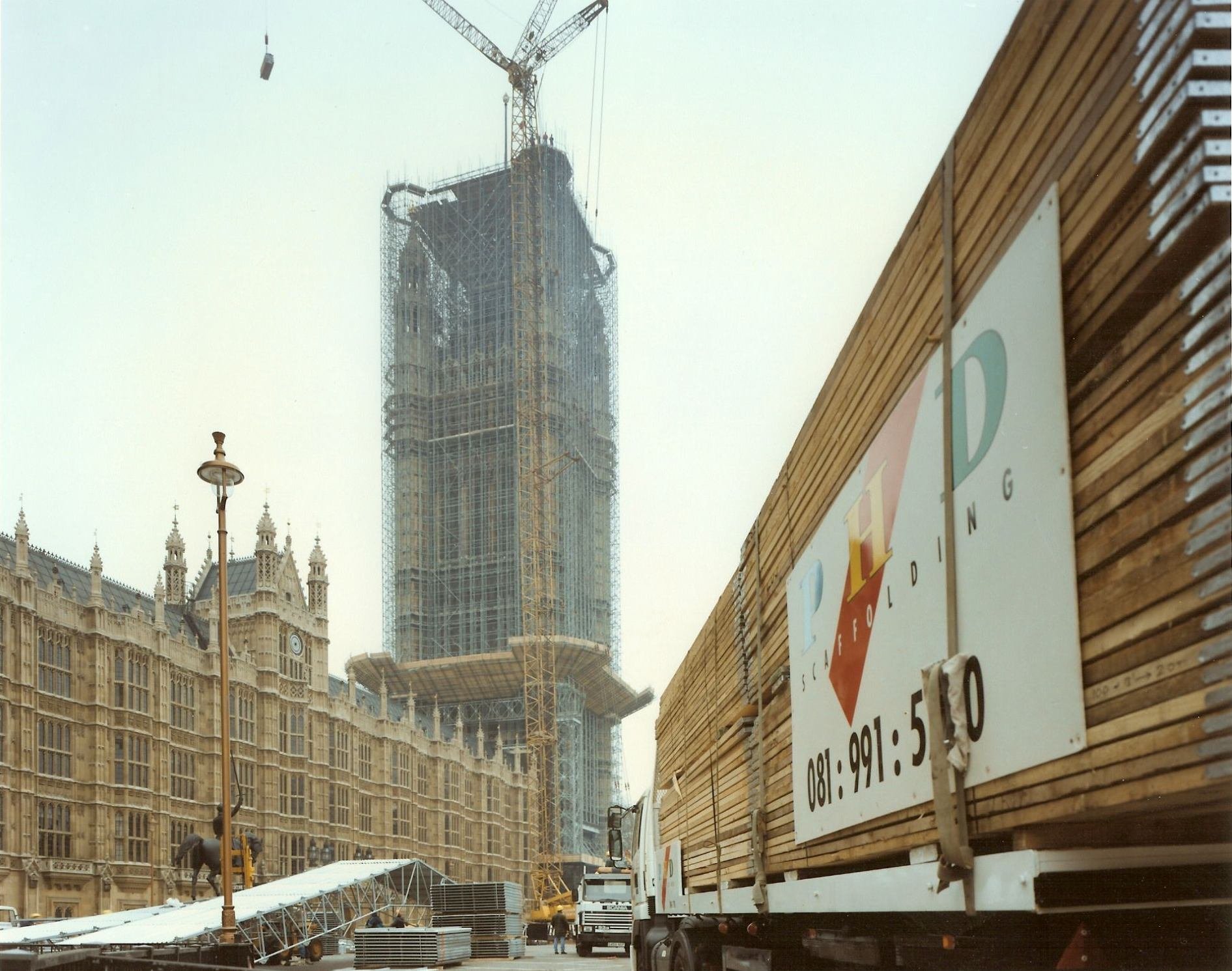
Victoria Tower is particularly relevant to the 2026 story because internal refurbishment of the tower forms part of the proposed phase-one programme. The photograph also gives readers an immediate sense of the access systems and temporary works required when contractors intervene in the Palace's highly detailed historic architecture.
The Real Cost Could Be Far Higher
The £3 billion phase-one figure should not be confused with the ultimate cost of restoring Westminster.
Parliament's February costed proposals examined several delivery strategies with dramatically different price tags and schedules. The lowest-cost option presented before inflation and potential savings was a full decant, under which parliamentary operations would temporarily leave the Palace to allow construction teams significantly greater access.
The full-decant programme was estimated at £8.4 billion to £11.5 billion before inflation and identified opportunities. Once inflation and opportunities are incorporated, Parliament's published range is approximately £10.7 billion to £15.2 billion.
An Enhanced Maintenance and Improvement Plus, or EMI+, strategy carries a substantially higher projected range. Including inflation and identified opportunities, the published estimate runs from approximately £18.1 billion to £36.1 billion.
Source: https://publications.parliament.uk/pa/jt5901/jtselect/jtrandrcb/1576/report.html
Those enormous ranges demonstrate why the debate is no longer simply about whether Westminster requires restoration. The critical question is how construction can be organized without exposing taxpayers to decades of avoidable costs.
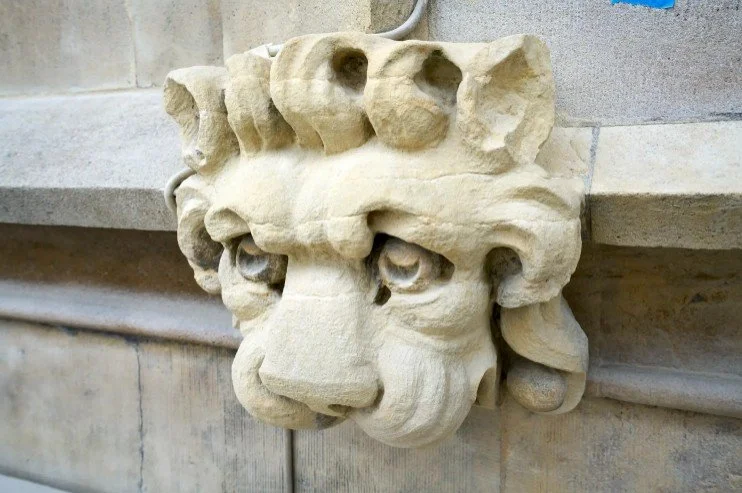
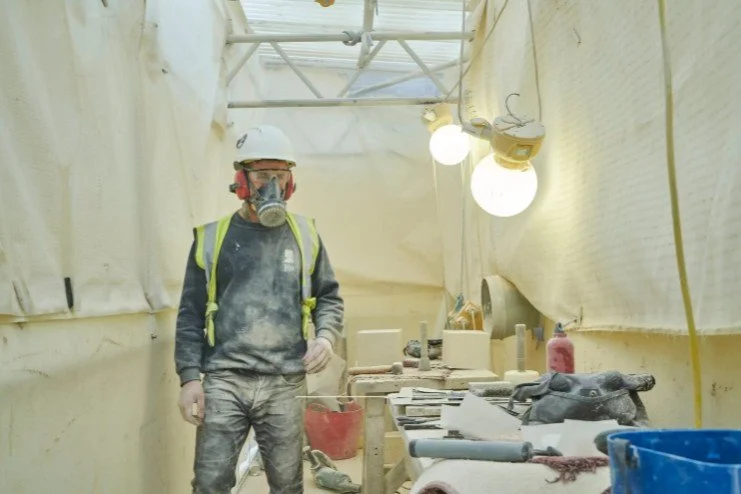
This close-up gives the article a useful change in scale. Instead of showing Westminster as one enormous megaproject, it illustrates the painstaking heritage work required on individual windows, carvings and masonry elements. The Palace contains an enormous quantity of historically significant fabric that cannot simply be demolished and replaced using conventional construction methods.
Full Decant Versus Keeping Parliament Inside
The 2026 recommendations narrow the long-term discussion toward two principal strategies: full decant and EMI+.
Under full decant, both Houses would eventually move out as necessary while major construction progresses through the Palace. Although politically and logistically difficult, giving contractors greater control over the building could allow work to proceed faster and more efficiently.
Parliament estimates the full-decant programme could take approximately 19 to 24 years overall. Main works could begin around 2032 to 2033 under the earliest assumptions, with programme completion potentially occurring between approximately 2045 and 2049.
EMI+, by comparison, would maintain more parliamentary activity inside the Palace while construction takes place. That reduces the scale of disruption at any single moment but makes construction considerably more complicated. Workers would have to operate around functioning parliamentary areas, security requirements, heritage protections and live building systems.
The result is a programme potentially extending for decades longer.
Source: https://publications.parliament.uk/pa/jt5901/jtselect/jtrandrcb/1576/report.html
A final decision between the two recommended delivery approaches is expected no later than mid-2030.
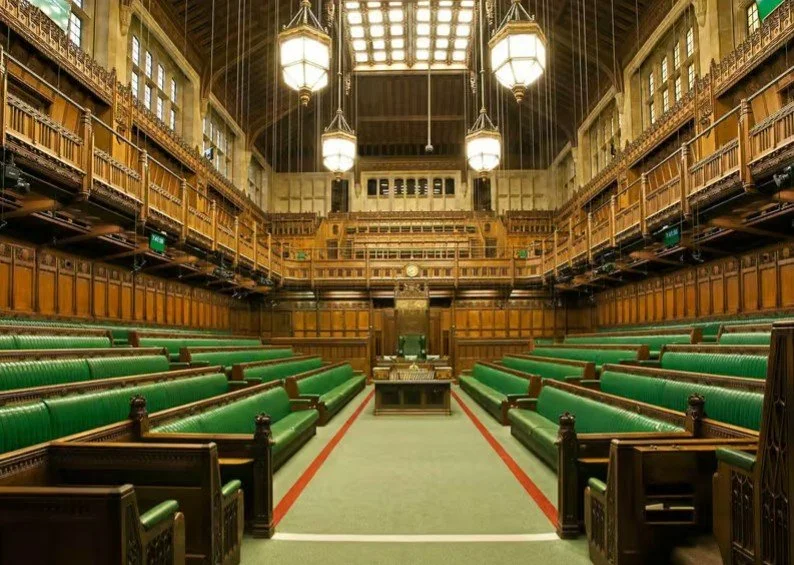
The Commons chamber puts the "decant" debate into perspective. Westminster is not an empty historic building waiting to be restored; it is an active workplace at the center of British government. Moving parliamentary operations elsewhere would be disruptive, but attempting major construction while Parliament remains operational creates its own substantial logistical, security and scheduling problems.
Delaying Westminster Is Also Expensive
The extraordinary headline costs make further delays politically tempting, but Parliament's own estimates suggest postponement carries a substantial price.
The 2026 costed proposals estimate that delaying the start of the programme's delivery phase costs around £70 million annually through additional reactive maintenance and continued development of options. More significantly, each additional year could add approximately £250 million to £350 million through construction inflation across the programme.
Source: https://publications.parliament.uk/pa/jt5901/jtselect/jtrandrcb/1576/report.html
That creates an uncomfortable equation. Waiting can postpone the immediate political pain of approving billions in expenditure, but it does not freeze the building's deterioration or construction prices.
The project could also become a major source of construction employment. Parliament estimates approximately 1,500 to 4,000 full-time-equivalent roles could be required each year during construction, creating long-term demand across heritage conservation, mechanical and electrical engineering, specialist trades, stonework and major-project management.
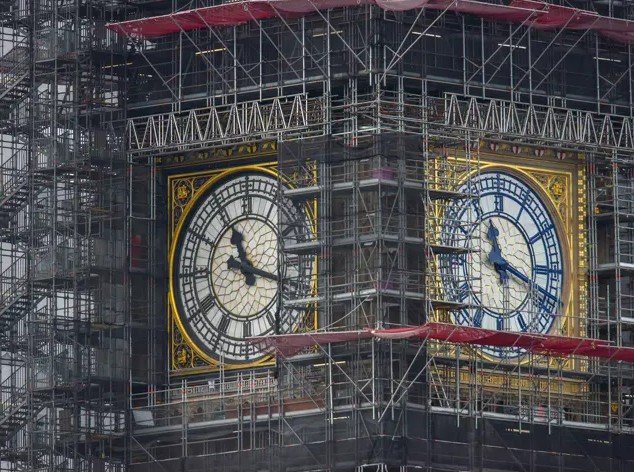
The completed Elizabeth Tower project offers readers a tangible example of what major heritage conservation at Westminster looks like in practice. Its restoration involved specialist stonework, clock conservation, accessibility improvements and extensive temporary access infrastructure. It provides useful visual context for the much larger Restoration and Renewal Programme now being considered for the Palace.
2026 Could Become Westminster's Turning Point
Westminster has been discussing large-scale restoration for years. What makes 2026 different is the emergence of detailed cost ranges, a proposed £3 billion first phase and a clearer path toward choosing the eventual construction strategy.
The Restoration and Renewal Client Board published its 2026 Annual Progress Report in July, while parliamentary scrutiny of the programme's cost and governance has continued. The Public Accounts Committee has questioned programme leaders over costs, timescales, temporary accommodation and accountability — scrutiny that is likely to intensify as spending moves closer to physical construction.
The Palace of Westminster renovation is therefore becoming much more than a heritage conservation project. It is an enormous infrastructure challenge involving logistics, security, construction sequencing, public money and the continued operation of Britain's legislature.
For decades, Westminster's deteriorating infrastructure could largely remain hidden behind one of the world's most famous façades. In 2026, that is becoming increasingly difficult. The debate is shifting from whether Britain can afford to renovate Parliament to whether it can afford to keep delaying it.
The maze of scaffolding, temporary coverings and restricted work areas provides a glimpse of the logistical challenge facing teams responsible for a future multi-billion-pound restoration programme.
Sources
UK Parliament — Delivering restoration and renewal of the Palace of Westminster: the costed proposals published
https://www.parliament.uk/business/news/2026/feb-2026/delivering-restoration-and-renewal-of-the-palace-of-westminster-the-costed-proposals-published/
UK Parliament — Delivering restoration and renewal of the Palace of Westminster: the costed proposals
https://publications.parliament.uk/pa/jt5901/jtselect/jtrandrcb/1576/report.html
UK Parliament — Restoration and Renewal Programme Background
https://www.parliament.uk/about/living-heritage/building/restoration-and-renewal-programme/about-rr/background-of-the-programme/
UK Parliament — The Recommended Way Forward
https://www.parliament.uk/about/living-heritage/building/restoration-and-renewal-programme/the-recommended-way-forward/
UK Parliament — What's Next?
https://www.parliament.uk/about/living-heritage/building/restoration-and-renewal-programme/about-rr/whats-next/
UK Parliament — Restoration and Renewal Client Board Publications
https://committees.parliament.uk/committee/616/restoration-and-renewal-client-board/publications/reports-responses/
House of Commons Library — Restoration and Renewal: Developing the Strategic Case and Costed Proposals
https://commonslibrary.parliament.uk/research-briefings/cbp-9945/
