

Norway Is Building the World’s Deepest Mega Tunnel
By BuildBrief News Desk
NORWAY — Beneath the cold waters of Norway’s Boknafjord, construction crews are blasting through solid rock on an infrastructure project that will push road engineering deeper than ever before. The E39 Rogfast tunnel is being built to a maximum depth of approximately 392 meters — 1,286 feet — below sea level, and when completed, Norway says it will become the world’s longest and deepest subsea road tunnel.
Known as Rogfast, the enormous project will create a roughly 27-kilometer, or 16.8-mile, permanent road connection between Randaberg and Bokn in Rogaland. The Norwegian Public Roads Administration, Statens vegvesen, currently expects the tunnel to open in 2033.
The project is not simply about breaking engineering records. Rogfast is designed to eliminate a ferry crossing on the E39 highway and reduce travel time between Stavanger and Bergen by approximately 40 minutes, strengthening one of western Norway’s most important transportation corridors.
Source: https://www.vegvesen.no/vegprosjekter/europaveg/e39rogfast/
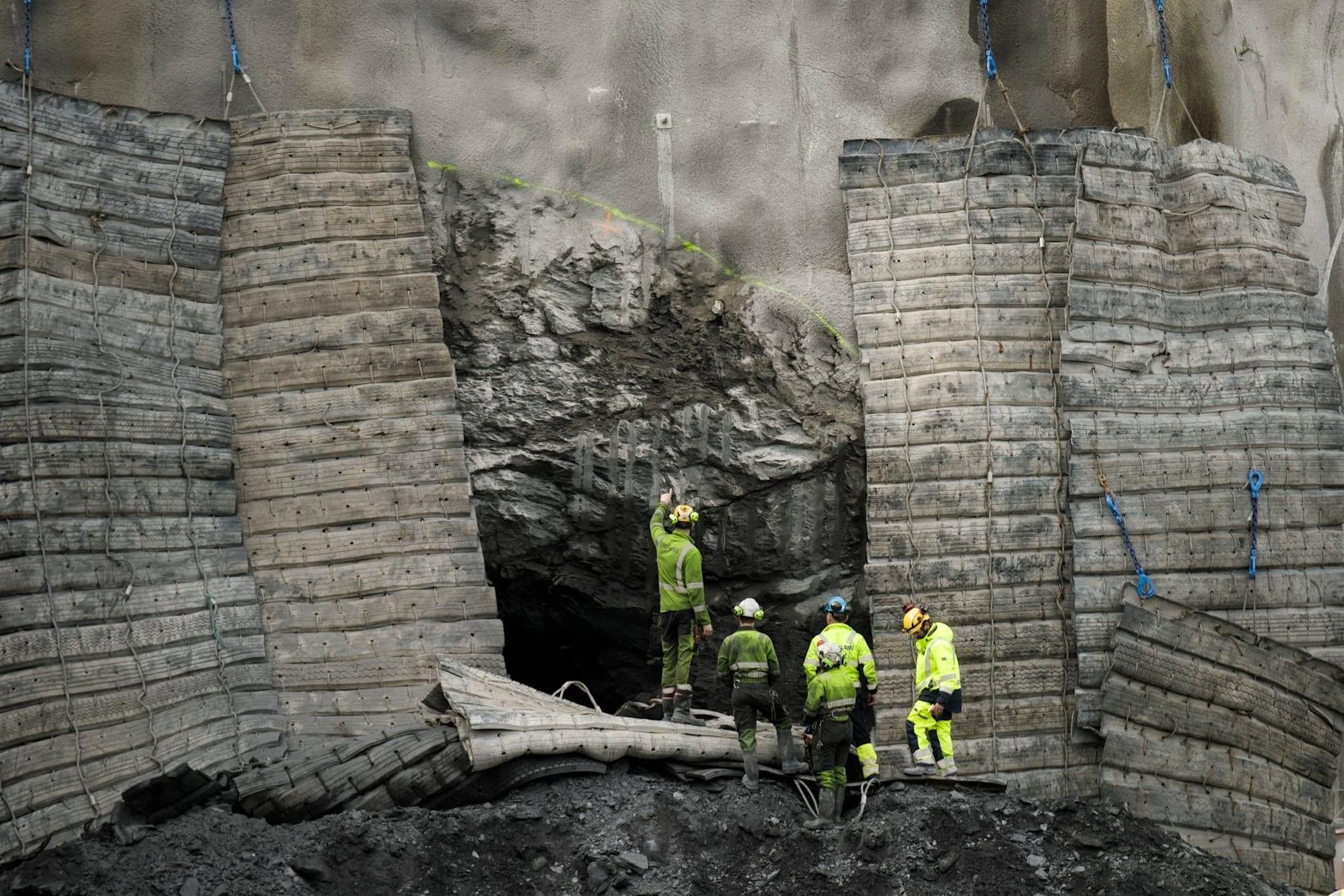
Deep beneath Norway’s rugged coastline, crews are carving out what will become the world’s longest and deepest subsea road tunnel. Rogfast will eventually carry E39 traffic beneath Boknafjord, reaching approximately 392 meters below sea level on its journey between Randaberg and Bokn.
A Highway Nearly 400 Meters Below Sea Level
The headline figure surrounding the Rogfast mega tunnel is its depth. At its lowest point, traffic will travel approximately 392 meters below sea level.
To put that into perspective, the Empire State Building's roof stands roughly 381 meters above street level. Rogfast's deepest roadway will therefore sit at a depth greater than the height of one of America's most recognizable skyscrapers.
The Norwegian Geotechnical Institute confirmed in April 2026 that crews are working on what will become the world's longest and deepest undersea road tunnel. NGI has been contracted by Statens vegvesen to conduct extended independent control of excavation and rock-support work during construction.
Source: https://prod.ngi.no/en/news/rogfast-project/
The extreme depth creates challenges that are largely invisible to future motorists. Engineers must understand rock conditions, groundwater behavior and geological weaknesses while constructing a safe permanent highway beneath the seabed. Excavated sections require carefully designed rock support, while ventilation, drainage, pumping, emergency systems and technical infrastructure must ultimately operate across an unusually long underground environment.
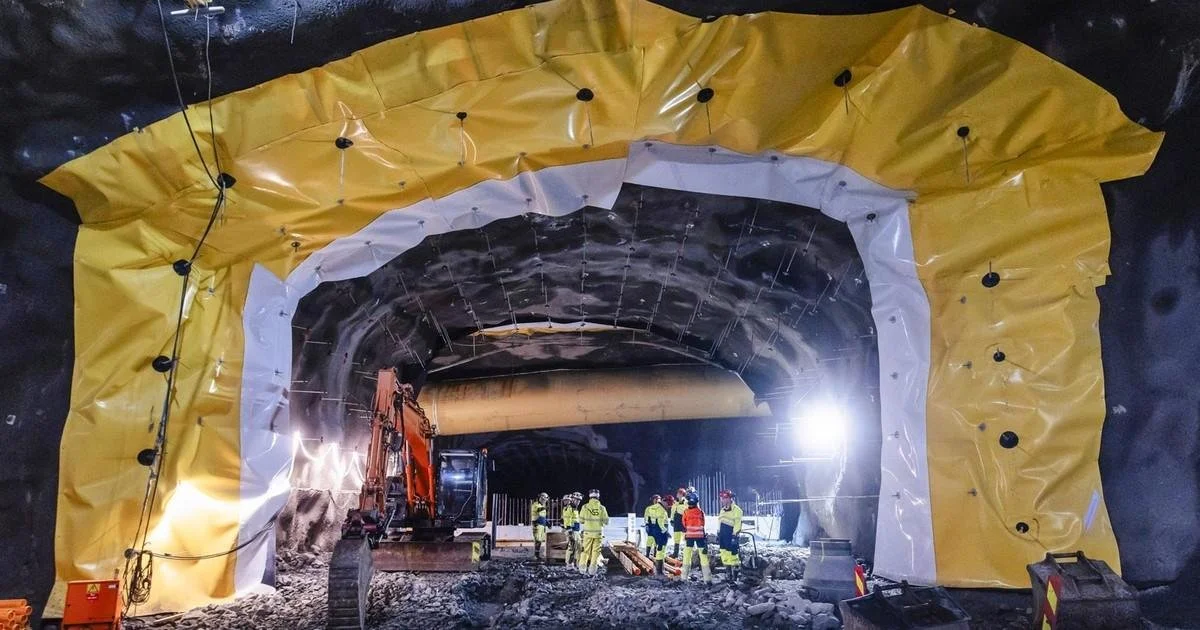
Tunnel crews are working through enormous quantities of Norwegian bedrock to create the twin tubes of Rogfast. The underground environment shows the physical scale behind the record-breaking project, where excavation, blasting and rock stabilization must eventually produce a highway capable of carrying everyday traffic deep beneath the sea.
Rogfast Is Much More Than One Tunnel
Calling Rogfast a 27-kilometer tunnel almost understates the scale of what Norway is constructing.
The main crossing consists of twin tunnel tubes beneath Boknafjord, while a separate tunnel connection provides access to the island municipality of Kvitsøy. Deep underground, engineers are also constructing a major road junction connecting Kvitsøy with the main tunnel.
The Kvitsøy section is particularly ambitious. According to Statens vegvesen, the E02 contract includes approximately 8.8 kilometers of twin-bore tunnel, technical buildings, pumping stations, two ventilation shafts and a grade-separated underground interchange incorporating ramps and roundabouts.
Instead of building a simple tube from one shoreline to another, crews are effectively creating a piece of highway infrastructure inside the mountain beneath the sea.
That complexity has made the Kvitsøy contract one of the defining portions of Rogfast. The contract was signed in 2024 for more than NOK 6.2 billion, making it the Norwegian Public Roads Administration's largest execution contract at the time.
Source: https://www.vegvesen.no/vegprosjekter/europaveg/e39rogfast/
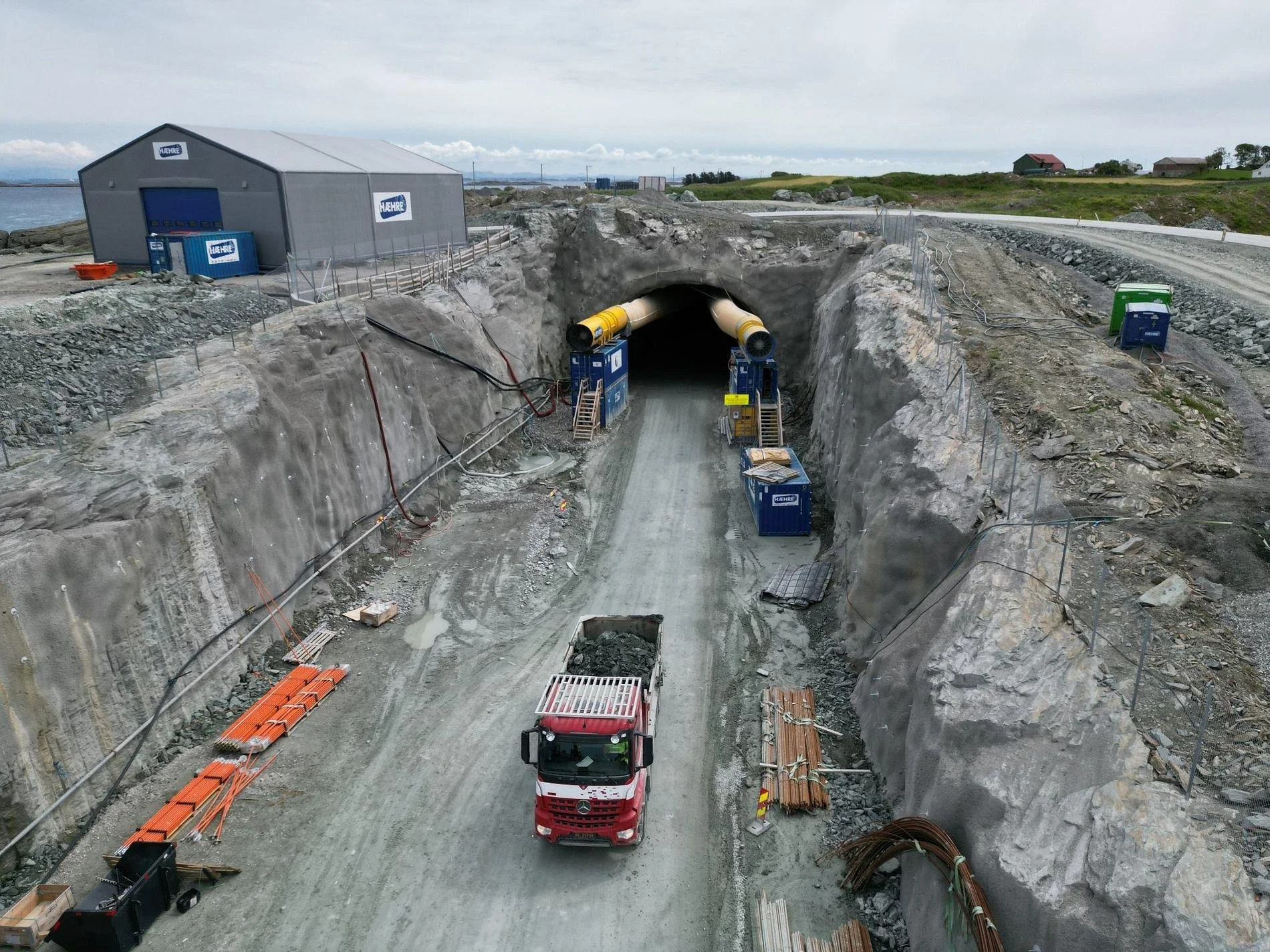
Heavy machinery operates inside a construction environment unlike an ordinary highway project. Rogfast is being driven through rock from multiple directions, allowing crews to accelerate excavation of the enormous twin-tube crossing before the separate tunnel drives eventually meet beneath Boknafjord.
Construction Is Advancing From Multiple Directions
Building a tunnel this long from only two portals would create a massive scheduling problem, so Rogfast is being excavated from several locations.
Crews are driving the tunnel northward from Randaberg, southward from Bokn and outward from the Kvitsøy area. This approach allows multiple construction teams to attack the underground alignment simultaneously before eventually meeting beneath the fjord.
Major contractors include Skanska on the northern section and an Implenia-Stangeland joint venture on other sections of the project.
The scale of those contracts shows how much underground construction is involved. Skanska's northern contract includes roughly 18.5 kilometers of tunnel construction when the two bores are counted together, alongside approximately two kilometers of surface road.
One of the project's significant 2026 milestones arrived in February, when crews achieved breakthrough in the first of two ventilation shafts on Kvitsøy. Statens vegvesen reported that the completed shaft extends 211 meters vertically down to the ventilation hall.
Source: https://www.vegvesen.no/vegprosjekter/europaveg/e39rogfast/
It is a reminder that the challenge is not simply moving horizontally through rock. Contractors must create an entire underground transportation system capable of supporting traffic safely for decades.
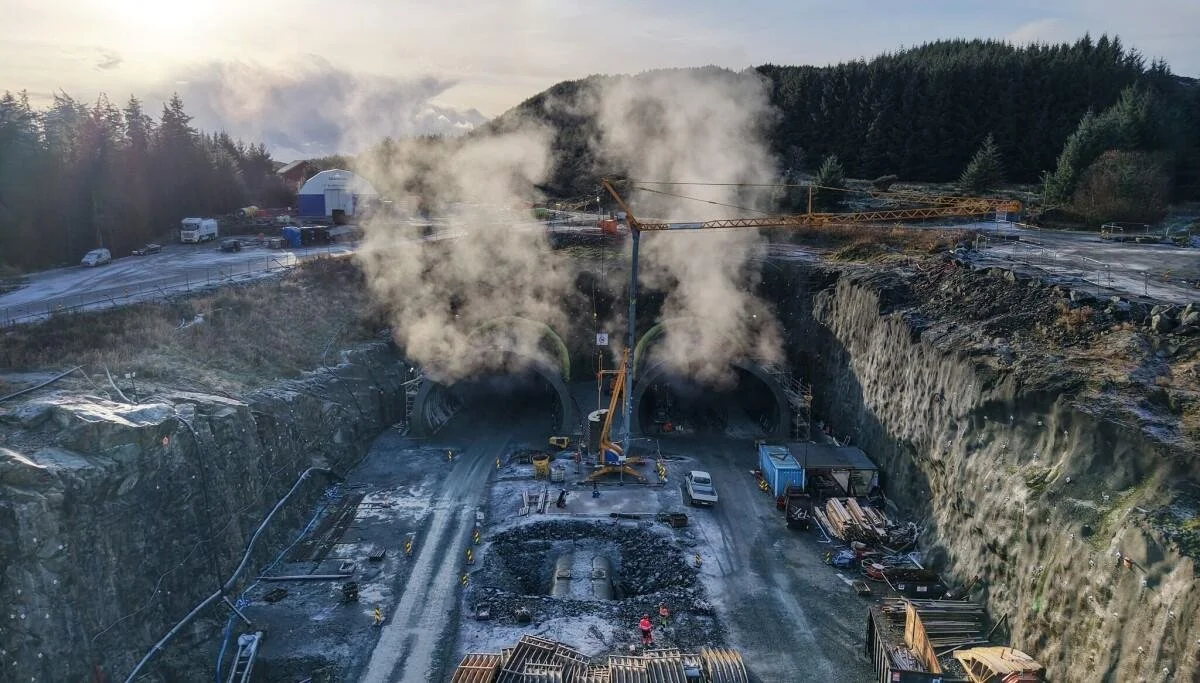
The small island municipality of Kvitsøy sits above one of Rogfast’s most remarkable engineering features. Far below the landscape, engineers are building an underground road connection linking the island with the main subsea highway, transforming the project from a straightforward tunnel crossing into a complex underground road network.
Why Norway Is Spending Billions Beneath a Fjord
Rogfast is part of a much bigger Norwegian transportation ambition: improving the E39 corridor along the country's western coastline.
Norway's geography makes conventional highway construction extraordinarily difficult. Fjords cut deeply into the coast, meaning motorists frequently rely on ferries to continue journeys that would otherwise be straightforward road trips.
Rogfast is intended to replace the ferry connection across Boknafjord and create a permanent highway link. Once operational, Statens vegvesen estimates it will cut approximately 40 minutes from travel between Stavanger and Bergen.
Source: https://www.vegvesen.no/vegprosjekter/europaveg/e39rogfast/
The benefits extend beyond individual drivers. Faster and more predictable freight movements could improve logistics for businesses along western Norway, while communities currently separated by ferry schedules gain a continuous road connection.
Norway's parliament has previously described Rogfast as important for developing a more integrated residential and labor market in southwestern Norway.
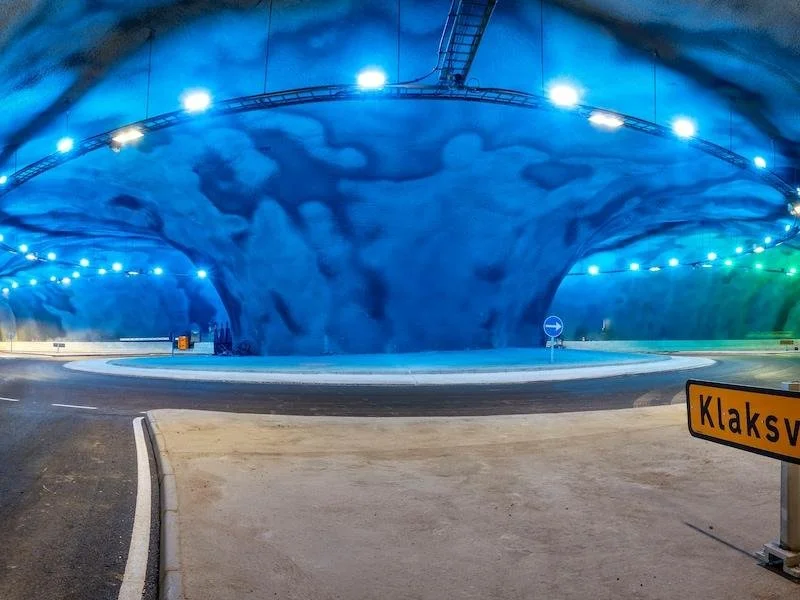
Rogfast is more than a pair of exceptionally deep tunnel tubes. Beneath Kvitsøy, the project incorporates ramps and an underground interchange that will connect island traffic with the main E39 route. The huge excavated spaces demonstrate just how much infrastructure is being constructed out of sight beneath the Norwegian landscape.
The Cost of Building the World's Deepest Road Tunnel
Record-breaking infrastructure rarely comes cheaply.
Statens vegvesen currently lists Rogfast's total cost at NOK 20.6 billion in 2020 kroner. The project previously experienced cost increases significant enough to interrupt its original construction trajectory before work resumed under a revised approach.
Source: https://www.vegvesen.no/vegprosjekter/europaveg/e39rogfast/
The project's individual contracts are themselves enormous. Skanska's northern tunnel contract was valued at almost NOK 5 billion when awarded, while the central Kvitsøy contract exceeds NOK 6.2 billion.
Those figures reflect more than excavation. Rogfast requires roadway construction, rock stabilization, ventilation, drainage, electrical systems, technical buildings, pumping stations, emergency infrastructure and sophisticated monitoring equipment, all installed deep underground.
At nearly 400 meters below sea level, reliability is not optional.
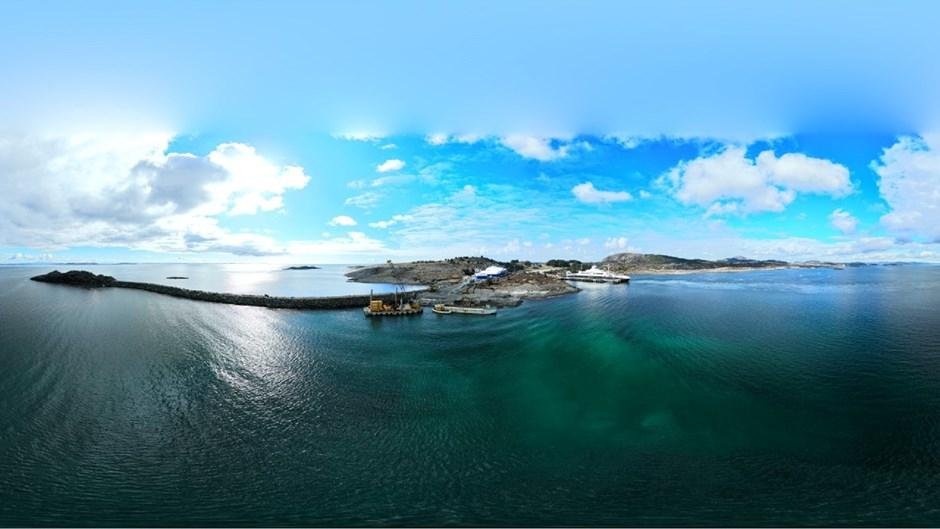
Boknafjord illustrates the geographical challenge that has shaped transportation across western Norway for generations. Instead of relying on a ferry to cross this expanse of water, future E39 traffic will descend into the rock and travel beneath the fjord through a permanent 27-kilometer subsea road connection.
A New Benchmark for Mega Tunnel Construction
Rogfast stands out because it combines several engineering extremes in a single project: exceptional depth, extraordinary length, twin highway tunnels, a subsea interchange and a connection to an island positioned above the main alignment.
The project is attracting attention beyond Norway. In October 2025, representatives connected with plans for a possible rail tunnel beneath the Strait of Gibraltar visited Statens vegvesen to learn from Rogfast's engineering and construction experience.
Source: https://www.vegvesen.no/vegprosjekter/europaveg/e39rogfast/
That international interest demonstrates why the project matters beyond Scandinavian transportation. The techniques being tested and refined beneath Boknafjord could influence future subsea infrastructure projects elsewhere in the world.
If the current schedule holds, motorists will begin using Rogfast in 2033. They will descend through miles of rock, pass beneath one of Norway's great fjords and eventually reach a roadway almost 400 meters below sea level — all without leaving the E39.
For drivers, the finished tunnel may ultimately feel like another piece of highway. For the engineers and construction crews building it, Rogfast is something far more significant: an attempt to redefine how deep a modern road can go.

Norway’s dramatic western coastline is beautiful, but its mountains, islands and deep fjords create formidable obstacles for road transportation. Rogfast is part of the wider effort to improve the E39 corridor, replacing another ferry-dependent section with a permanent highway connection and making journeys between major western communities more predictable.
Sources
Norwegian Public Roads Administration (Statens vegvesen) — E39 Rogfast
https://www.vegvesen.no/vegprosjekter/europaveg/e39rogfast/
Norwegian Geotechnical Institute (NGI) — Ensuring Quality in the World's Deepest Road Tunnel
https://prod.ngi.no/en/news/rogfast-project/
Statens vegvesen — Rogfast E02 Contract
https://kommunikasjon.ntb.no/pressemelding/17980715/den-storste-rogfast-kontrakten-er-utlyst?publisherId=17847490
Statens vegvesen — E39 Rogfast, Skanska Selected as Contractor
https://kommunikasjon.ntb.no/pressemelding/17947034/e39-rogfast-skanska-ble-valgt-som-entreprenor?publisherId=17847490
Norwegian Parliament (Stortinget) — E39 Rogfast Project Information
https://www.stortinget.no/no/Saker-og-publikasjoner/Publikasjoner/Representantforslag/2019-2020/dok8-201920-108s/?all=true
