

China’s Nuclear Power Boom: Inside the Largest Nuclear Construction Program in the World
While much of the world is talking about a nuclear energy comeback, China is already building it.
Across China's eastern and southern coastline, enormous construction sites are turning nuclear power from a long-term energy strategy into physical infrastructure. Multiple reactors are being built simultaneously, new projects continue receiving approval, domestic reactor designs are being deployed at scale, and China is experimenting with technologies ranging from small modular reactors to high-temperature gas-cooled reactors.
The numbers are extraordinary.
At the end of 2025, mainland China had 59 nuclear power units operating with 62.48 gigawatts of installed capacity, according to information submitted by China ahead of the 2026 Nuclear Non-Proliferation Treaty Review Conference. Another 53 units were under construction or moving through the approval pipeline, representing approximately 62.93 GW.
By August 2025, the Chinese government counted 112 reactors operating, under construction, or approved, with approximately 125 GW of combined capacity.
China also stated in 2026 that nearly 60 percent of the nuclear generating capacity newly connected to grids worldwide during the previous decade was in China.
This isn't simply a nuclear renaissance.
It is an industrial construction program on a scale unmatched anywhere else in the world.
And the consequences could reach far beyond China's electrical grid.
Source: Ministry of Foreign Affairs of the People's Republic of China, “Implementation of the Treaty on the Non-Proliferation of Nuclear Weapons in the People's Republic of China,” April 2026.
https://www.mfa.gov.cn/eng/wjb/zzjg_663340/jks_665232/kjfywj_665252/202604/t20260423_11898080.html
Source: State Council Information Office of the People's Republic of China, “Carbon Peaking and Carbon Neutrality: China's Plans and Solutions,” November 2025.
https://english.www.gov.cn/archive/whitepaper/202511/08/content_WS690ee812c6d00ca5f9a076cd.html
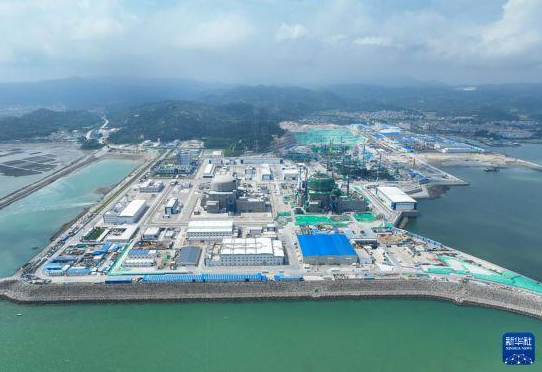
A massive aerial view of the Zhangzhou site provides one of the best illustrations of China's strategy of constructing multiple standardized Hualong One nuclear reactors at the same location. I’d use this as the featured image.
China Is Building Nuclear Power at Industrial Scale
The most remarkable aspect of the China nuclear power boom may not be any individual reactor.
It is repetition.
Building a nuclear power station is among the most complicated construction projects humans undertake. A modern reactor requires enormous quantities of concrete and steel, extremely sophisticated mechanical and electrical systems, specialized nuclear components, redundant safety systems, cooling infrastructure, transmission connections and thousands of highly trained workers.
In many countries, constructing one new reactor becomes a nationally significant megaproject.
China is building many.
The World Nuclear Association's reactor database currently lists projects under construction including units at Bailong, Changjiang, Haiyang, Jinqimen, Lianjiang and Lufeng, among others.
Several use China's domestic Hualong One reactor technology, while others use the CAP1000 design developed from Westinghouse AP1000 technology.
Instead of treating every nuclear station as a completely unique engineering experiment, China is moving toward repeated deployment of standardized reactor families.
That distinction is crucial.
The first unit of any complicated design requires engineers, contractors and manufacturers to solve thousands of problems.
Build another, and some of that knowledge survives.
Build ten, and the process can begin resembling an industrial program rather than a collection of unrelated megaprojects.
Source: World Nuclear Association, “China – Reactor Database,” accessed August 2026.
https://world-nuclear.org/nuclear-reactor-database/summary/China
Why China Needs So Much Electricity
China's nuclear expansion makes more sense when viewed against the scale of its overall energy system.
China is the world's largest electricity consumer and an enormous manufacturing economy. Factories, cities, transportation systems, industrial facilities, data centers and increasingly electrified vehicles all require enormous quantities of electricity.
At the same time, China is attempting to reduce the carbon intensity of its economy.
That creates an enormous challenge.
Wind and solar power are expanding at breathtaking speed in China. According to China's National Energy Administration, renewable generating capacity reached approximately 2.337 billion kilowatts, or 2,337 GW, by the end of 2025, accounting for roughly 60 percent of the country's total installed generating capacity.
During 2025 alone, China added approximately 438 GW of combined grid-connected wind and solar capacity.
Those numbers dwarf China's nuclear additions.
But nuclear power performs a different role.
A reactor can operate continuously for long periods and produce enormous quantities of electricity independent of whether the sun is shining or the wind is blowing.
Chinese officials have consequently described nuclear power as an important baseload energy source, particularly for heavily populated and industrialized coastal regions.
The strategy is therefore not simply nuclear versus renewables.
China is building nuclear, solar, wind, hydroelectric generation, pumped storage, transmission and other infrastructure simultaneously.
Source: National Energy Administration of China, “National Renewable Energy Power Development and Construction Scheduling Meeting,” February 12, 2026.
https://www.nea.gov.cn/20260212/7778cf9907bf4eabb0e73a939ff2ade2/c.html
Source: State Council Information Office of the People's Republic of China, “SCIO Briefing on White Paper ‘China's Energy Transition.’”
https://english.scio.gov.cn/pressroom/node_9013099.html
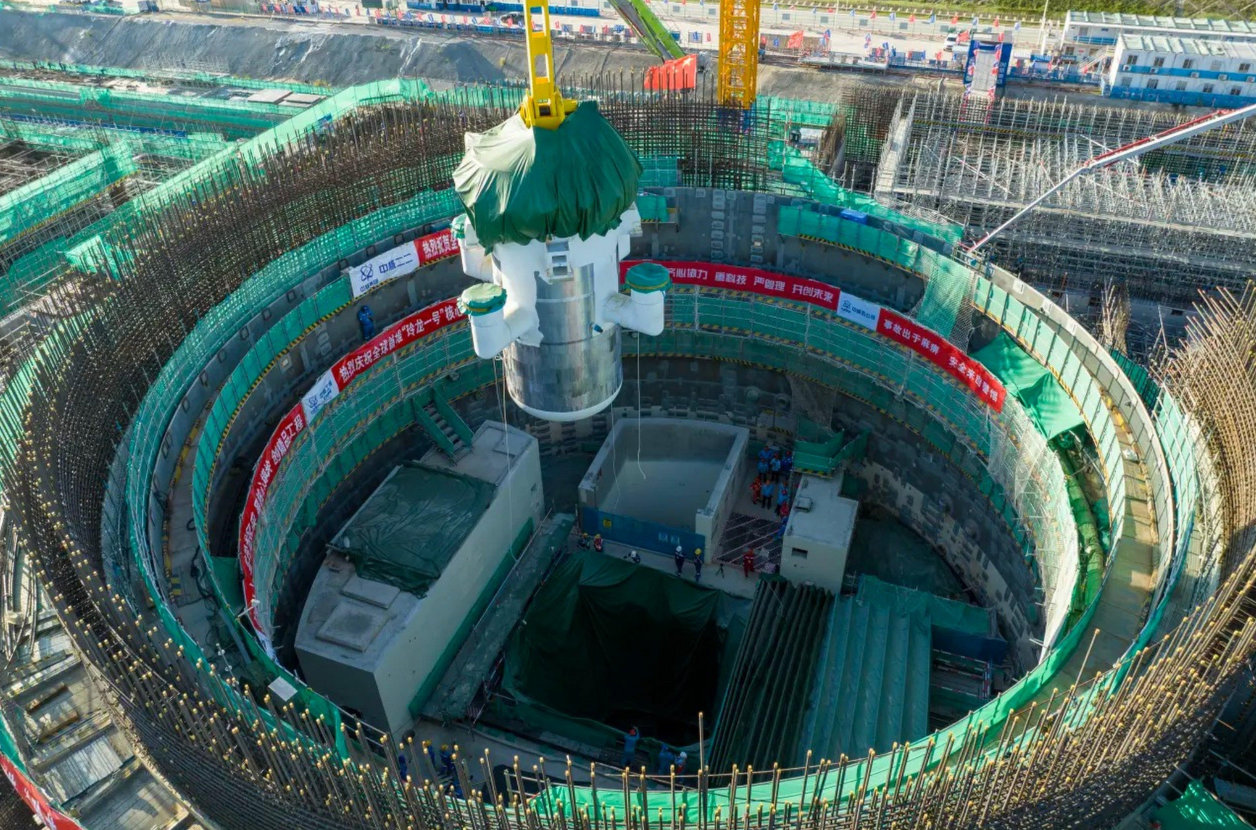
Workers installing a Hualong One reactor pressure vessel at Fuqing Nuclear Power Plant in China
The Hualong One Is at the Center of the Expansion
One of the most important technologies behind China's nuclear ambitions is the Hualong One, also known internationally as the HPR1000.
The Hualong One is a Chinese-designed Generation III pressurized-water reactor.
Its importance goes beyond electricity production.
Developing a domestic reactor allows China to reduce dependence on foreign nuclear technology while building its own engineering, manufacturing, construction and operating expertise.
By the end of 2025, according to China's Ministry of Foreign Affairs, eight Hualong One units had entered operation in China and abroad.
More are being built.
That creates something extremely valuable in nuclear construction: experience.
When countries build reactors only occasionally, specialized workforces can disappear between projects. Engineers retire. Suppliers lose orders. Contractors move into other industries. Knowledge accumulated on one project may be lost before the next begins.
China's continuous construction pipeline helps avoid that problem.
Engineers can move from one nuclear project to another.
Manufacturers can maintain production.
Construction crews gain experience.
Lessons learned from one reactor can influence the next.
The reactor becomes not merely a power plant but a repeatable industrial product.
Source: Ministry of Foreign Affairs of the People's Republic of China, “Implementation of the Treaty on the Non-Proliferation of Nuclear Weapons in the People's Republic of China,” April 2026.
https://www.mfa.gov.cn/eng/wjb/zzjg_663340/jks_665232/kjfywj_665252/202604/t20260423_11898080.html
China Is Also Building a Small Modular Reactor
Large conventional reactors aren't the only part of the story.
On the island province of Hainan, China is constructing Linglong One, also known as the ACP100.
It is a small modular reactor, or SMR.
The concept behind SMRs is straightforward: instead of relying exclusively on enormous gigawatt-scale reactors, smaller reactor systems could potentially be manufactured and deployed more flexibly.
China describes Linglong One as the world's first land-based commercial small modular pressurized-water reactor project.
The unit is being constructed at the Changjiang nuclear power site in Hainan.
Its electrical output is much smaller than that of a Hualong One reactor, but the project's significance lies in proving whether SMR technology can move beyond demonstrations and become a commercially deployable product.
China stated in 2025 that Linglong One was expected to enter operation in 2026.
If successful, the implications extend beyond China's grid.
SMRs could eventually be used for electricity generation, industrial energy, district heating, desalination or applications where a conventional 1,000-plus-megawatt reactor would simply be too large.
Source: Ministry of Foreign Affairs of the People's Republic of China, “Statement by the Chinese Delegation on Peaceful Uses of Nuclear Energy at the Third Session of the Preparatory Committee for the 2026 NPT Review Conference,” May 2025.
https://www.fmprc.gov.cn/eng/wjb/zzjg_663340/jks_665232/kjfywj_665252/202505/t20250509_11618155.html
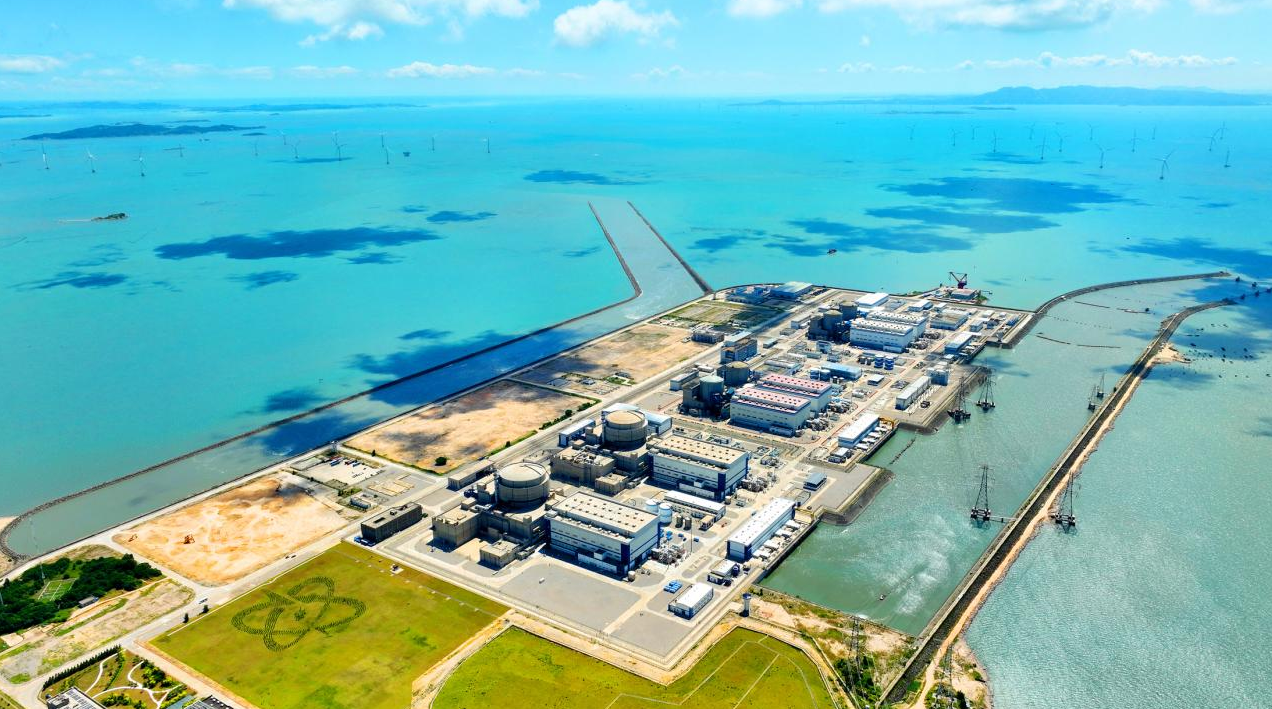
Fuqing Units 5 and 6 formed China's Hualong One demonstration project and provide a strong visual for the section explaining how China moved its domestic Generation III reactor design into commercial operation.
China Has Already Commercialized Another Advanced Reactor Type
Even more interesting is what is happening at Shidaowan in Shandong Province.
China has placed a high-temperature gas-cooled reactor into commercial operation there.
Unlike the pressurized-water reactors that dominate the global nuclear industry, this system uses a different reactor concept involving pebble-bed fuel and helium coolant.
The demonstration project has approximately 200 MW of generating capacity.
Chinese authorities describe it as the world's first commercial pebble-bed modular high-temperature gas-cooled reactor.
Why does that matter?
Because the future of nuclear power may extend beyond simply producing electricity.
Advanced high-temperature reactors could potentially provide heat for industrial processes that are difficult to electrify.
Steel, chemicals and other heavy industries consume enormous quantities of energy, often at high temperatures.
If nuclear systems can economically provide both electricity and industrial heat, the technology could attack emissions in areas where wind turbines and solar panels alone face greater challenges.
Source: Ministry of Foreign Affairs of the People's Republic of China, “Statement by the Chinese Delegation on Peaceful Uses of Nuclear Energy,” May 2025.
https://www.fmprc.gov.cn/eng/wjb/zzjg_663340/jks_665232/kjfywj_665252/202505/t20250509_11618155.html
The Construction Supply Chain May Be China's Biggest Advantage
Reactors attract attention, but China's greatest nuclear advantage could eventually be the factories behind them.
A nuclear construction program requires an enormous industrial ecosystem.
Reactor pressure vessels must be manufactured.
Steam generators must be built.
Pumps and valves must meet demanding standards.
Control systems must be produced.
Nuclear-grade concrete and steel must be supplied.
Fuel must be fabricated.
Thousands of welds must be inspected.
Heavy components must be transported.
Qualified engineers, electricians, pipefitters, welders, equipment operators, inspectors and technicians must be available.
A country that builds one reactor every decade has difficulty maintaining that ecosystem.
China's enormous pipeline creates sustained demand.
That demand gives manufacturers a reason to invest in factories, tooling, training and specialized workers.
And once the supply chain exists, the next reactor becomes easier to support.
This is one reason China's nuclear program matters globally.
China isn't simply accumulating reactors.
It is accumulating the industrial capacity to build reactors.
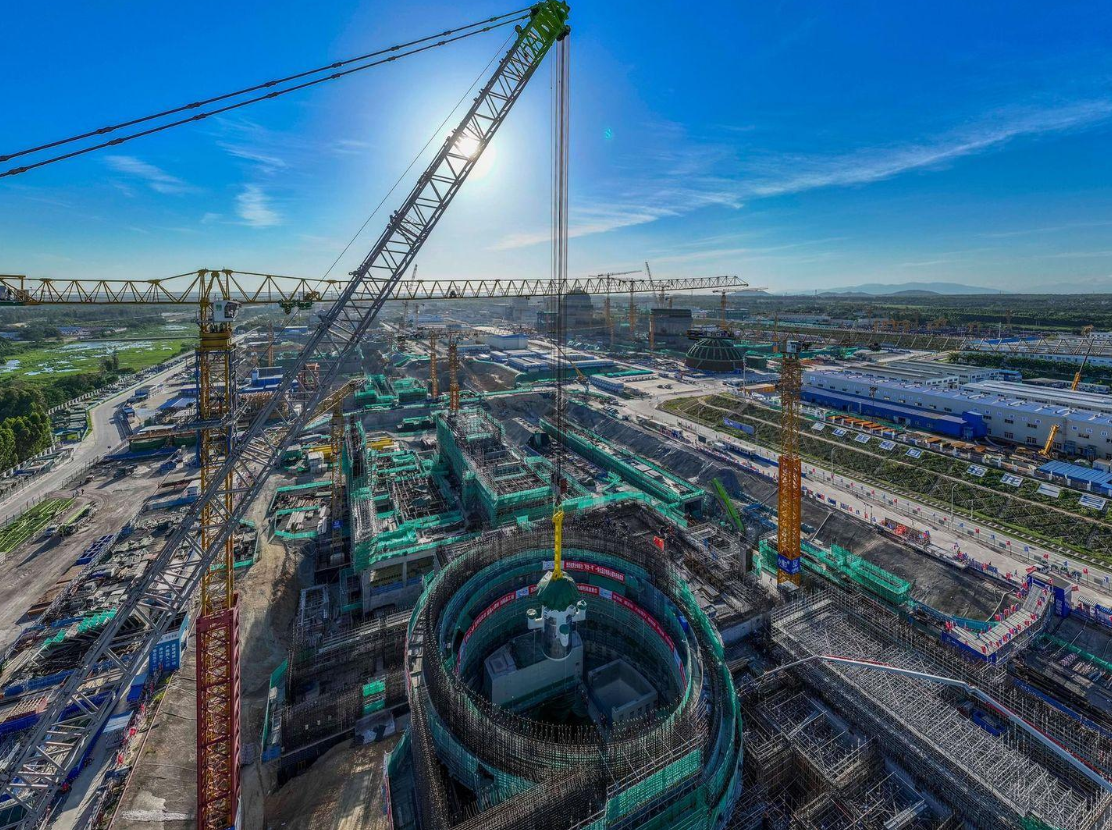
This construction image shows why China's nuclear program is different from countries building isolated reactors: Zhangzhou is planned as a six-unit Hualong One site, demonstrating nuclear construction at fleet scale.
The West's Nuclear Construction Problem
This creates a striking comparison with the United States and Europe.
Western countries possess enormous nuclear engineering expertise, and the United States still operates one of the world's largest nuclear fleets.
But constructing new large reactors has often proven difficult.
Projects can face regulatory uncertainty, financing challenges, supply-chain limitations, changing political support and severe cost overruns.
When projects are built infrequently, these problems reinforce one another.
Workers have less experience.
Suppliers receive fewer orders.
Every project becomes unusual.
Costs increase.
Higher costs discourage future projects.
And the industry receives even fewer opportunities to learn through repetition.
China is attempting the opposite cycle.
Build repeatedly.
Train workers repeatedly.
Order components repeatedly.
Improve designs repeatedly.
Keep suppliers busy.
Then build again.
That doesn't guarantee every Chinese nuclear project will be cheap, fast or trouble-free.
But it creates conditions under which construction experience can accumulate.
The lesson is relevant far beyond nuclear energy.
Infrastructure industries improve by doing the work continuously.
Nuclear Power Is Still Small Compared With China's Entire Grid
There is an important reality that can get lost amid the enormous construction numbers.
Nuclear power still represents a relatively small portion of China's total electricity system.
Chinese government figures have indicated that nuclear represents less than 2 percent of installed generating capacity while producing close to 5 percent of electricity.
That difference exists partly because nuclear reactors generally operate at much higher capacity factors than intermittent generation.
China's solar fleet is vastly larger by nameplate capacity.
By early 2025, solar capacity was approaching one terawatt, while nuclear capacity was around 61 GW.
China is therefore not replacing renewable development with nuclear power.
It is pursuing both at extraordinary scale.
The resulting energy system could combine massive renewable capacity with nuclear baseload generation, hydroelectricity, storage, long-distance transmission and, for the foreseeable future, substantial fossil-fuel generation.
Source: State Council Information Office of the People's Republic of China, “SCIO Briefing on White Paper ‘China's Energy Transition.’”
https://english.scio.gov.cn/pressroom/node_9013099.html
Source: National Energy Administration of China, National Power Industry Statistics, 2025.
https://www.nea.gov.cn/
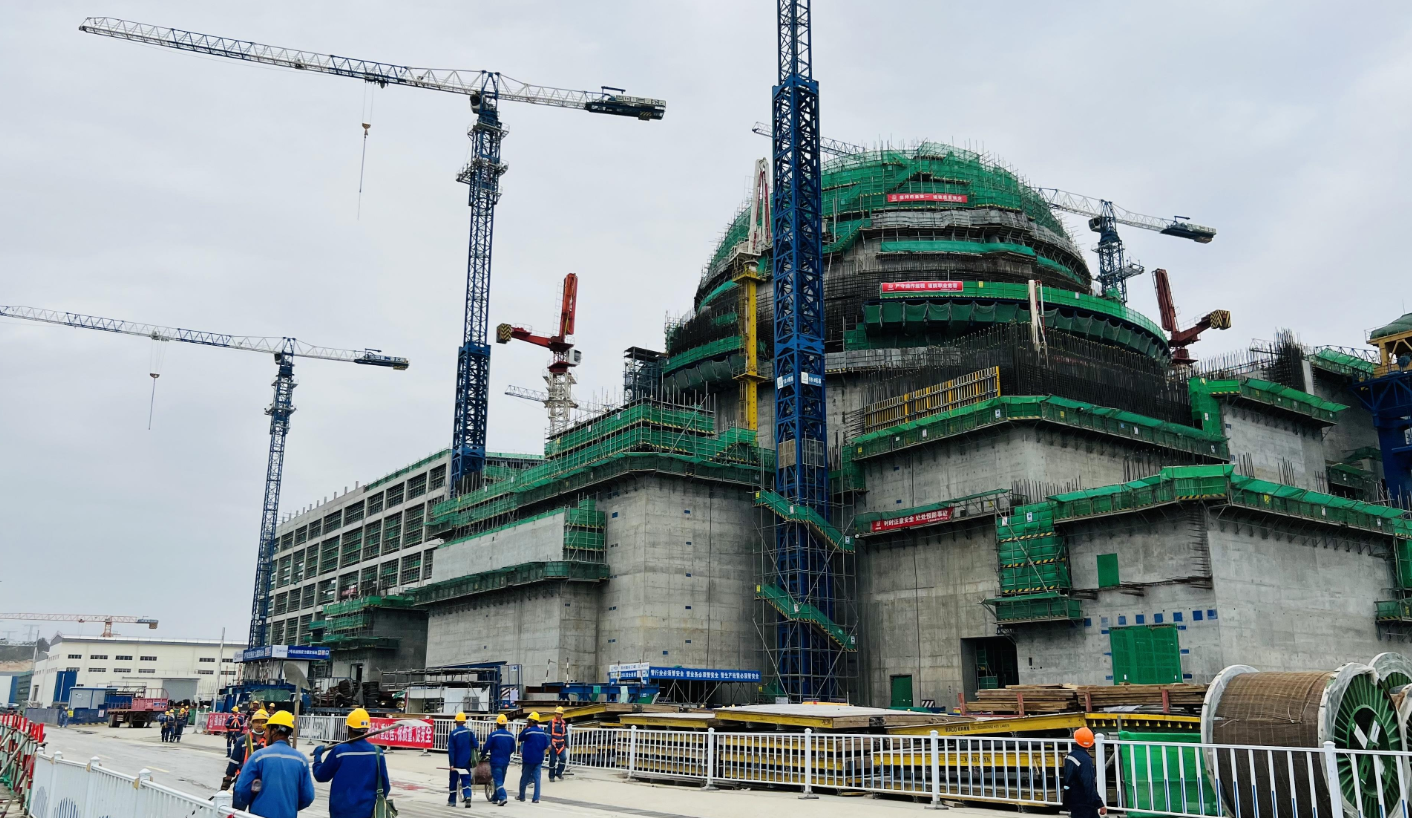
Taipingling provides a current example of China's expanding Hualong One fleet. Unit 1 began commercial operation in April 2026, while the site is planned to eventually contain six Hualong One units.
Coal Is the Complication
Any discussion of China's nuclear boom needs to acknowledge the contradiction at the center of its energy transition.
China is building enormous amounts of clean electricity.
It also remains heavily dependent on coal.
This means China's nuclear construction cannot simply be interpreted as evidence that fossil fuels are disappearing.
Instead, China appears to be constructing multiple energy systems at once.
That reflects the country's enormous electricity demand and its concern about energy security.
From Beijing's perspective, the electricity system must accomplish several objectives simultaneously.
It must be reliable.
It must support industrial growth.
It must supply massive cities.
It must reduce pollution and carbon emissions over time.
And it must avoid excessive dependence on imported energy.
Nuclear power fits remarkably well into that strategy because a relatively small quantity of nuclear fuel can generate enormous amounts of electricity.
Nuclear Energy Is Also an Energy-Security Strategy
China imports large quantities of oil and natural gas.
Those imports can be affected by international markets, shipping routes and geopolitical tensions.
Nuclear power changes that equation.
Uranium still requires a supply chain, and China imports uranium. But nuclear fuel has an extraordinary energy density, allowing utilities and governments to maintain larger strategic inventories relative to the electricity produced.
Once a reactor is operating, it can produce electricity continuously for long periods between refueling outages.
That makes nuclear energy valuable not only from a climate perspective but from an energy-security perspective.
China's investment in domestic reactor designs, fuel-cycle capabilities and nuclear manufacturing should therefore be understood partly as an attempt to control more of its own energy infrastructure.
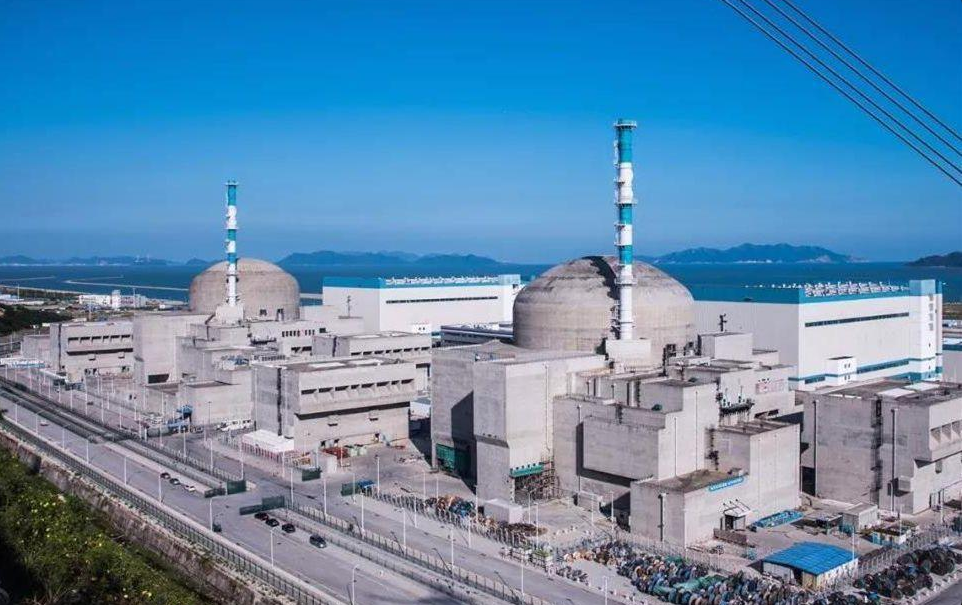
A turbine-hall photograph is useful because it shows that a nuclear project extends far beyond the reactor itself. Huge conventional power-generation systems convert the reactor's thermal energy into electricity for the grid.
Safety Remains the Question That Cannot Be Ignored
Nuclear energy offers enormous quantities of low-carbon electricity.
It also carries unique risks.
The accidents at Three Mile Island, Chernobyl and Fukushima fundamentally shaped public attitudes toward nuclear energy.
A rapidly expanding reactor fleet therefore creates an enormous regulatory responsibility.
Chinese authorities state that nuclear development must proceed only when safety is guaranteed and emphasize that the country's operating nuclear fleet has maintained a strong safety record.
But the challenge grows as the fleet grows.
More reactors mean more sites to regulate.
More workers to train.
More components to inspect.
More radioactive material to manage.
And eventually, more reactors that will need decommissioning.
The success of China's nuclear boom will therefore be judged not simply by how quickly reactors can be constructed.
It will be judged by whether they can operate safely for decades.
Source: State Council of the People's Republic of China, “Carbon Peaking and Carbon Neutrality: China's Plans and Solutions,” November 2025.
https://english.www.gov.cn/archive/whitepaper/202511/08/content_WS690ee812c6d00ca5f9a076cd.html
The Nuclear Boom Could Become an Export Industry
China's nuclear ambitions extend beyond its borders.
Hualong One units have already been deployed internationally, including in Pakistan.
If China can establish a record of repeatedly constructing standardized reactors domestically, it gains something potentially valuable in the international market: proof of deployment.
Countries considering nuclear power don't simply need a reactor design.
They need financing.
Engineering.
Construction expertise.
Fuel.
Training.
Maintenance.
Waste-management plans.
Regulatory assistance.
Long-term technical support.
China's enormous domestic program can help develop all of those capabilities.
Nuclear technology could consequently become another major infrastructure export alongside railways, electrical equipment, renewable-energy technology and other large industrial systems.
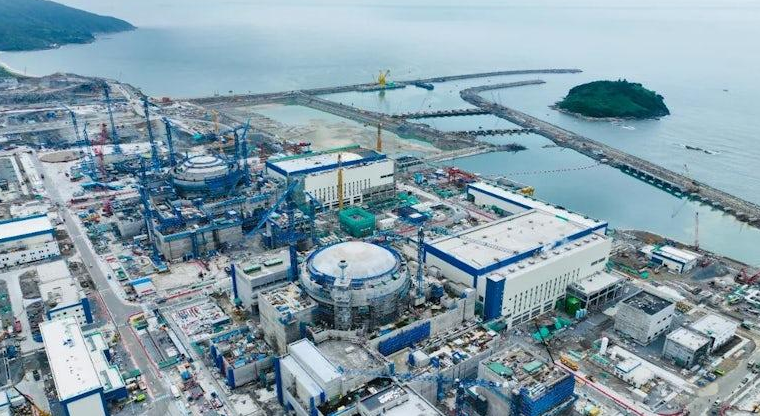
China's Linglong One project illustrates the next stage of its nuclear strategy: developing smaller modular reactor technology alongside its fleet of conventional gigawatt-scale reactors.
The World Is Beginning to Follow China's Direction
China's nuclear boom is occurring as global attitudes toward nuclear power are changing.
Electricity demand is rising.
Artificial intelligence and data centers are creating new demand for reliable power.
Governments are trying to reduce carbon emissions without sacrificing grid stability.
Energy security has returned to the center of geopolitical policy.
As a result, countries that previously reduced or abandoned nuclear development are reconsidering it.
The World Nuclear Association estimated in 2026 that global nuclear investment may need to rise dramatically to meet government energy goals. Roughly 80 reactors were under construction globally, with much of that construction concentrated in China and a handful of other countries.
The difference is that China did not wait for the global nuclear renaissance.
It was already building.
Source: World Nuclear Association, “World Nuclear Performance and Reactor Database,” 2026.
https://world-nuclear.org/
China Is Turning Nuclear Power Into a Construction Industry
Perhaps the most important lesson from China's nuclear expansion has less to do with reactor physics than with construction.
Nuclear power becomes extraordinarily difficult when every reactor is treated as a one-off megaproject.
China is attempting to make it repeatable.
Standardized designs.
Established contractors.
Experienced construction crews.
Domestic component manufacturing.
Continuous project pipelines.
Multiple reactors built simultaneously.
Those characteristics resemble an industrial production system more than the traditional Western megaproject model.
If China succeeds, it could demonstrate that the biggest obstacle facing nuclear energy isn't necessarily the technology itself.
It may be the loss of the industrial systems required to build that technology efficiently.
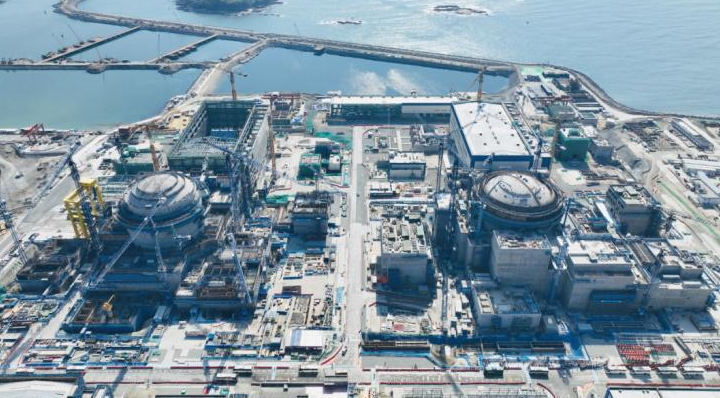
San'ao demonstrates how broadly Hualong One deployment is spreading across China's coastal provinces. The site is planned for six Hualong One units, and Unit 1 was connected to the grid in March 2026.
The World's Largest Nuclear Construction Experiment
China's nuclear expansion is ultimately one of the largest infrastructure experiments underway anywhere on Earth.
Dozens of reactors are operating, being constructed or preparing for construction. Domestic reactor designs are moving into fleet deployment. Small modular reactors are progressing toward commercial operation. Advanced reactor concepts are already producing electricity.
And all of this is occurring alongside the world's largest expansion of wind and solar power.
The result challenges the idea that countries must choose one clean-energy technology.
China is effectively choosing everything.
Solar.
Wind.
Hydroelectricity.
Storage.
Transmission.
Nuclear.
And, at least for now, coal.
Whether that strategy ultimately produces a cleaner, more secure and more reliable Chinese electrical system will take decades to determine.
But one conclusion is already difficult to dispute:
No country is currently treating nuclear construction at the same industrial scale as China.
While much of the world debates whether nuclear energy should return, China is pouring concrete, fabricating components, training workers and connecting reactors to the grid.
The real significance of the China nuclear power boom may therefore extend beyond the number of reactors it produces.
China is rebuilding something many countries allowed to weaken: an entire industrial ecosystem capable of constructing nuclear power plants repeatedly.
If that system succeeds, the global nuclear industry of the 2030s and 2040s could look very different from the industry of today.
And China may have a substantial head start.
Sources
Ministry of Foreign Affairs of the People's Republic of China — “Implementation of the Treaty on the Non-Proliferation of Nuclear Weapons in the People's Republic of China.” April 2026.
https://www.mfa.gov.cn/eng/wjb/zzjg_663340/jks_665232/kjfywj_665252/202604/t20260423_11898080.html
State Council of the People's Republic of China — “Carbon Peaking and Carbon Neutrality: China's Plans and Solutions.” November 2025.
https://english.www.gov.cn/archive/whitepaper/202511/08/content_WS690ee812c6d00ca5f9a076cd.html
Ministry of Foreign Affairs of the People's Republic of China — “Statement by the Chinese Delegation on Peaceful Uses of Nuclear Energy at the Third Session of the Preparatory Committee for the 2026 NPT Review Conference.” May 2025.
https://www.fmprc.gov.cn/eng/wjb/zzjg_663340/jks_665232/kjfywj_665252/202505/t20250509_11618155.html
National Energy Administration of China — “National Renewable Energy Power Development and Construction Scheduling Meeting.” February 2026.
https://www.nea.gov.cn/20260212/7778cf9907bf4eabb0e73a939ff2ade2/c.html
State Council Information Office of the People's Republic of China — “SCIO Briefing on White Paper ‘China's Energy Transition.’”
https://english.scio.gov.cn/pressroom/node_9013099.html
World Nuclear Association — “China – Reactor Database.” Accessed August 2026.
https://world-nuclear.org/nuclear-reactor-database/summary/China
World Nuclear Association — Nuclear power information and global reactor data.
https://world-nuclear.org/
