

Why Is Canada’s Ontario Line So Expensive? Inside Toronto’s $34 Billion Subway Project
By BuildBrief News Desk
TORONTO — Toronto’s Ontario Line was introduced in 2019 as a transformative rapid-transit project carrying an estimated price tag of $10.9 billion. Seven years later, the number being discussed is dramatically different.
In August 2026, Metrolinx president and CEO Michael Lindsay confirmed that the cost of the Ontario Line had reached approximately $34 billion, with the final figure expected to climb further because major contracts have yet to be completely finalized. That puts the emerging price at more than three times the figure presented when the project was announced.
The obvious question is: Why is the Ontario Line so expensive?
The answer is more complicated than a conventional construction cost overrun. Toronto is building a technically demanding subway through one of Canada's densest urban environments while simultaneously paying for stations, tunnels, trains, property, financing, utility relocations, long-term maintenance and other costs that were not necessarily represented in the original headline number.
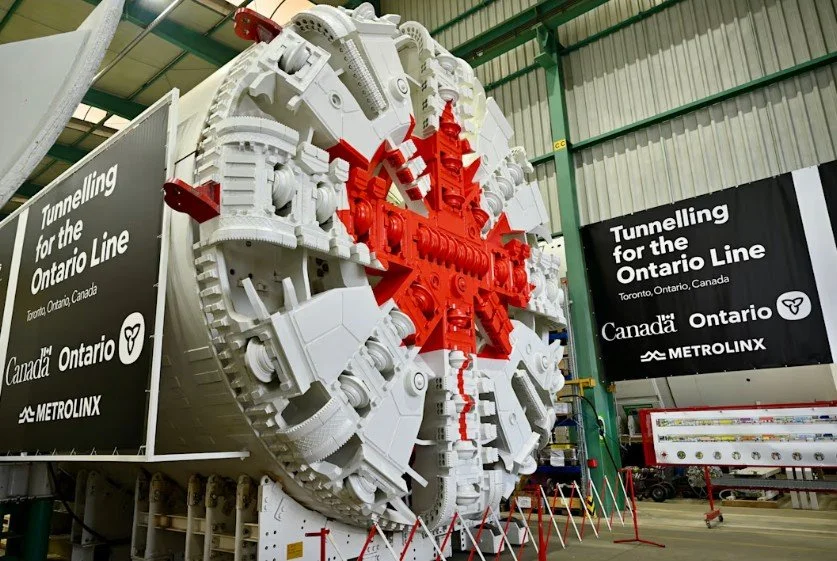
This enormous tunnel boring machine illustrates the scale of equipment required to build the Ontario Line beneath Toronto. The project’s twin machines must excavate kilometres of tunnels through soil and rock while crews simultaneously install the structural lining needed to create a permanent subway tunnel.
The Original $10.9 Billion Wasn't the Whole Story
Perhaps the most important detail in understanding the Ontario Line cost increase is that comparing today's figure directly with the original $10.9 billion estimate does not produce a perfect apples-to-apples comparison.
Metrolinx acknowledged in 2024 that the original figure did not include every expense eventually associated with delivering and operating the railway. Global News reported that the $27.2 billion estimate circulating at the time included construction as well as 30 years of operations and maintenance.
https://globalnews.ca/news/10585617/ontario-line-original-price-metrolinx/
The expanded estimate also incorporated expenses such as property acquisition, lifecycle costs and operating funds. In other words, part of the apparent escalation resulted from a broader accounting of what the Ontario Line would actually cost over decades.
That does not mean construction has remained inexpensive. Far from it. Major Ontario Line contracts individually run into the billions of dollars.
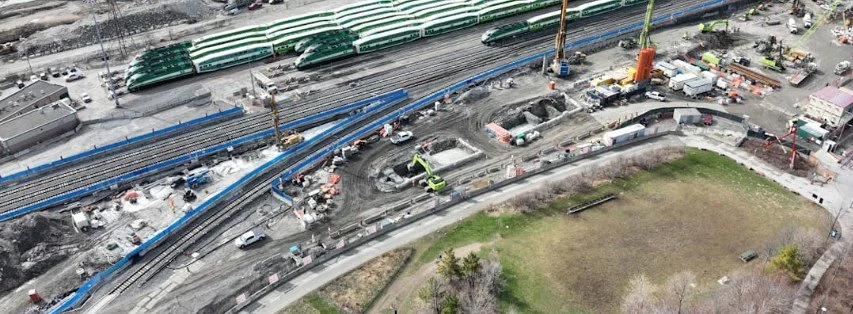
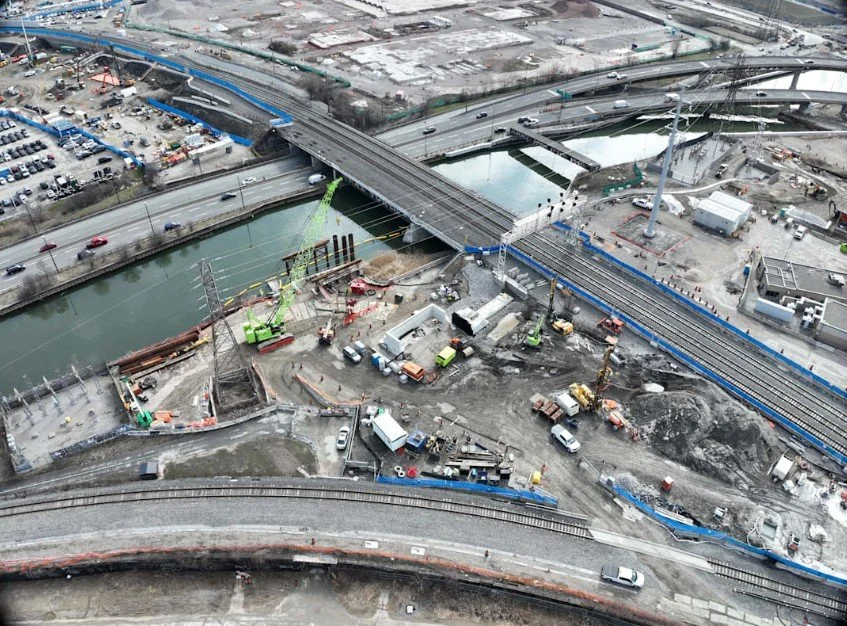
The sprawling Exhibition construction site shows why the Ontario Line cannot be viewed simply as kilometres of new subway track. Crews are building station structures while working beside active rail infrastructure, creating a complicated construction environment where new transit must be integrated with Toronto’s existing network.
Building a Subway Beneath Downtown Toronto Is Expensive
The 15.6-kilometre Ontario Line will run between Exhibition/Ontario Place and the Ontario Science Centre area, crossing downtown Toronto and connecting with existing TTC and GO Transit infrastructure.
A large portion must be constructed underground.
In July 2026, Metrolinx reported that two tunnel boring machines were beginning the process of excavating nearly six kilometres of twin tunnels beneath downtown Toronto. Supporting that operation requires far more than purchasing a pair of tunnel boring machines. Launch shafts, tunnel segments, spoil removal systems, ventilation, electrical infrastructure, logistics facilities and extensive monitoring all form part of the tunnelling program.
Then come the stations.
Building underground stations in a developed city can be enormously complicated because crews are not working with an empty construction site. They must contend with existing buildings, roads, utilities, sewers, transit infrastructure and constant pedestrian and vehicle movements.
The Ontario Line also needs interchange stations connecting passengers with existing subway lines, adding another layer of engineering complexity.
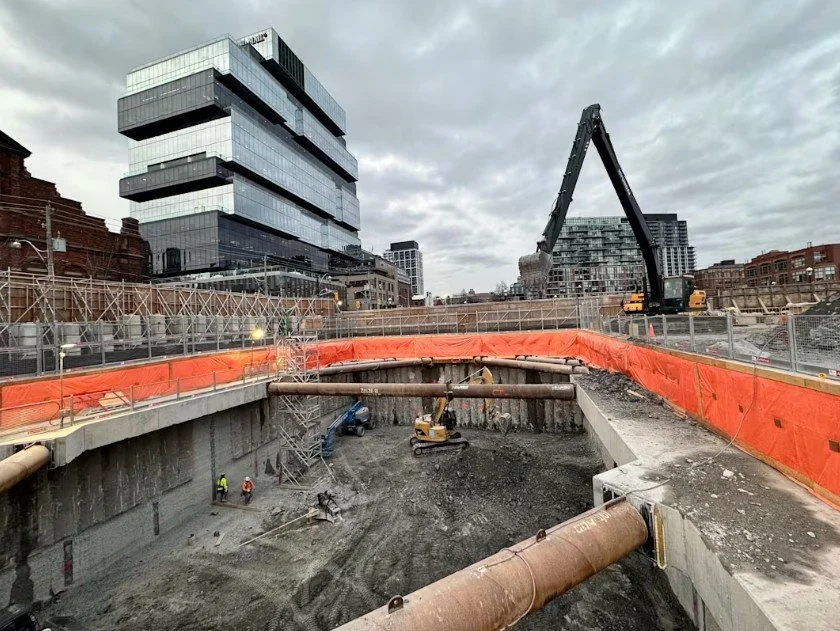
This deep excavation gives readers a clearer sense of what constructing an underground station actually involves. Instead of simply boring a tunnel beneath the city, crews must excavate enormous station spaces, stabilize surrounding ground and build structural systems capable of supporting streets and development above. Metrolinx has said excavation at locations such as Corktown has extended as deep as roughly 40 metres.
The Contracts Are Enormous
The scale of individual construction packages provides a clearer picture of where billions of dollars are going.
Infrastructure Ontario and Metrolinx awarded the Ontario Line South Civil contract for $6 billion in 2022. Of that amount, approximately $5.5 billion represented capital costs, with another $500 million allocated to financing and transaction costs.
That package alone includes approximately six kilometres of tunnelling between Exhibition and the Don Yard portal, seven stations and associated civil works.
It is only one piece of the railway.
Separate procurement packages cover trains and railway systems, operations and maintenance, the Pape tunnel and underground stations, and the elevated northern portion of the route.
The Pape section presents its own engineering challenges, including roughly three kilometres of tunnel, the new Cosburn Station and an interchange at the existing Pape subway station. The work also requires underpinning parts of the existing TTC station and constructing emergency exit facilities.
By August 2026, the newly reported $4.32 billion Pape tunnel and underground stations contract helped push the accumulated Ontario Line price to around $34 billion.
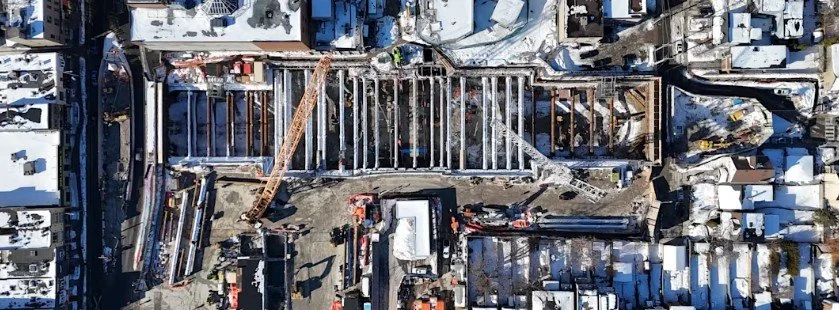
Much of the Ontario Line’s cost is tied to infrastructure passengers will never see. Before station excavation can advance, crews have to stabilize sites with extensive piling and reinforced concrete. Metrolinx says approximately 3,000 piles, totalling about 45 kilometres in length, were planned across the six underground downtown stations.
Inflation Changed the Construction Market
The Ontario Line also had unfortunate timing.
Its original estimate arrived in 2019, immediately before the global construction market experienced pandemic disruptions, material shortages, labour pressures, higher financing costs and substantial inflation.
Construction prices increased sharply in the years following COVID-19. Materials such as steel, concrete, electrical equipment and mechanical systems became more expensive, while contractors faced supply-chain uncertainty and rising labour expenses.
Metrolinx has pointed to supply-chain shocks and trade uncertainty as continuing sources of cost pressure.
That matters enormously on a megaproject. A relatively modest percentage increase applied to a multibillion-dollar construction package can translate into hundreds of millions of additional dollars.
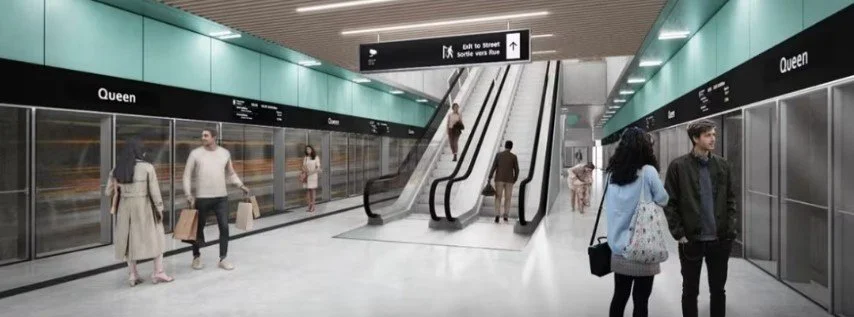
The tight construction footprint at Pape highlights one of the Ontario Line’s biggest challenges: building major new infrastructure inside established Toronto neighbourhoods. The future interchange must connect the Ontario Line with the existing Line 2 subway while crews manage surrounding streets, utilities, businesses and residential properties.
Financing and Risk Have a Price
Ontario is also using different procurement structures to deliver sections of the project.
The $6 billion South Civil contract, for example, was delivered through Infrastructure Ontario's public-private partnership model. Infrastructure Ontario says the approach transfers appropriate design, construction and financing risks to the private sector.
Risk transfer, however, is not free.
Contractors bidding on complex infrastructure must price uncertainty into their proposals. Financing expenses are also real project costs. The South Civil contract illustrates this clearly: approximately $500 million of its $6 billion value was associated with financing and transaction costs.
Other portions are using progressive design-build agreements, where Metrolinx and contractors work through development phases to finalize design, risk allocation, scope and pricing.
For the elevated guideway and stations contract, Infrastructure Ontario specifically describes a development process designed to establish those elements collaboratively before construction pricing is finalized.
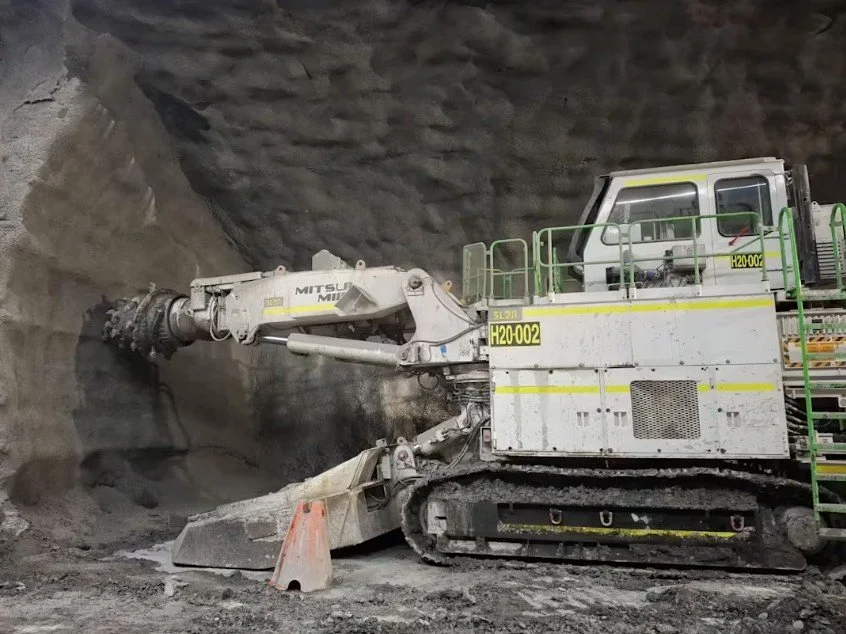
Not every section of an underground subway can be excavated with a conventional tunnel boring machine. Specialized equipment is also needed to carve out station caverns and connecting spaces through hard rock. It is one example of the technically intensive work hidden beneath Toronto’s streets as the Ontario Line takes shape.
It Is More Than 15.6 Kilometres of Track
Looking at the Ontario Line simply as a cost-per-kilometre subway can therefore be misleading.
The project requires 15 stations, tunnels beneath downtown, elevated structures, bridges, track, signalling, communications, power infrastructure, new trains, maintenance facilities and connections with existing transit networks. Property must be acquired, utilities relocated and active streets managed while construction proceeds.
Metrolinx's 2024–25 financial statements offer another glimpse into those less visible expenses. They identify millions of dollars in advances connected with Toronto Hydro services at an Ontario Line tunnel boring machine launch site and Hydro One utility relocation work.
These costs rarely produce dramatic photographs, but they are essential to constructing a functioning railway.
The Ontario Line is being threaded through infrastructure that Toronto already depends on every day. Existing tracks have to be shifted, bridges modified and new structures built while railway operations continue around the project. That integration adds complexity far beyond what would be expected when constructing a transit line through undeveloped land
So, Is the Ontario Line Really a $34 Billion Subway?
Yes — but with an important qualification.
The Ontario Line has unquestionably become an extraordinarily expensive infrastructure project, and its cost has risen dramatically since the $10.9 billion figure announced in 2019. As of August 2026, Metrolinx's CEO has put the accumulated figure at approximately $34 billion and indicated it will rise further as remaining contracts are finalized.
But saying the project simply “tripled in cost” can obscure how the numbers changed. The original estimate and subsequent totals have not always included exactly the same categories of spending. Later figures have incorporated costs extending beyond basic construction, including financing, operations and long-term maintenance.
That distinction does not eliminate legitimate questions over budgeting, procurement or transparency. If anything, the Ontario Line demonstrates why governments need to clearly separate construction costs, financing expenses, property acquisition, contingency, operations and lifecycle maintenance when announcing megaproject budgets.
Toronto needs additional rapid-transit capacity, and the Ontario Line is designed to provide it. But the project is also becoming a case study in just how expensive modern urban rail construction can become when ambitious engineering meets inflation, complicated underground construction, private financing, property requirements and one of Canada's most difficult construction environments.
The trains may eventually make travelling across Toronto considerably easier.
Building the railway beneath it is proving anything but simple.
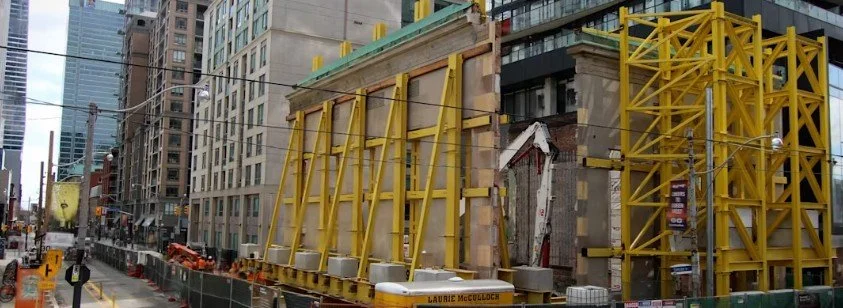
This photograph captures one of the less obvious reasons major urban subway projects become expensive. At Queen and Simcoe, construction required extensive engineering to preserve historic architecture, including temporarily relocating a roughly 300-tonne wall so work could proceed before returning it to its original position. It is a striking example of how the Ontario Line must be constructed around Toronto rather than through an empty corridor.
Sources
ConstructConnect / The Canadian Press — Ontario Line cost has tripled from original 2019 projection: Metrolinx CEO
https://canada.constructconnect.com/dcn/news/projects/2026/08/ontario-line-cost-has-tripled-from-original-2019-projection-metrolinx-ceo
CityNews Toronto — Ontario Line costs triple and likely to increase
https://toronto.citynews.ca/2026/08/11/ontario-line-costs-triple-and-likely-to-increase-as-per-latest-estimates/
Metrolinx — Tunnelling the New Ontario Line from Liberty Village
https://www.metrolinx.com/en/projects-and-programs/ontario-line/tunnelling-the-new-ontario-line-from-liberty-village
Infrastructure Ontario — Contract Awarded for Ontario Line South Package
https://www.infrastructureontario.ca/en/news-and-media/news/subway---ontario-line---southern-civil-stations-and-tunnel-project/contract-awarded-for-ontario-line-south-package/
Infrastructure Ontario — Ontario Line Elevated Guideway and Stations Agreement
https://www.infrastructureontario.ca/en/news-and-media/news/subway-ontario-line-elevated-guideway-and-stations/agreement-signed-for-ontario-line-elevated-guideway-and-stations/
Metrolinx — 2024–25 Annual Report
https://assets.metrolinx.com/image/upload/v1764159954/Documents/2024-25_Metrolinx_Annual_Report_-_EN.pdf
Global News — Original Ontario Line Price Didn't Include All Costs: Metrolinx CEO
https://globalnews.ca/news/10585617/ontario-line-original-price-metrolinx/
Global News — Ontario Line Subway Project Price Tag Increases by Billions
https://globalnews.ca/news/10579363/ontario-line-cost-increase/
