The Jobsite Is Getting Smarter: How AI and Robotics Are Changing Construction in 2026
Construction has always been an industry built around big machines, skilled workers, careful planning, and the ability to solve problems when conditions inevitably change. For decades, the basic formula remained fairly recognizable: workers operate equipment, supervisors coordinate crews, engineers work from plans, and project managers try to keep everything moving on schedule.
In 2026, however, something much bigger is beginning to happen.
Artificial intelligence, robotics, and autonomous construction equipment are moving out of the experimental stage and onto real jobsites.
This does not mean construction sites are suddenly filled with humanoid robots building skyscrapers by themselves. The reality is more practical—and arguably more exciting. AI systems are beginning to monitor projects, analyze jobsite conditions, help manage schedules, identify potential problems, and process construction documents. At the same time, autonomous and semi-autonomous equipment is taking on repetitive tasks, while specialized robots perform jobs ranging from layout and surveying to material handling.
Recent industry research suggests that construction's digital transformation is accelerating. A 2026 Deloitte study covering 954 construction and engineering businesses across six Asia-Pacific markets found that 46% were already using AI or machine-learning tools, compared with roughly one-quarter when the study began in 2023. citeturn0search10
The exciting part is not any single robot or piece of software. It is what happens when these technologies start working together.
From Construction Equipment to Intelligent Equipment
Heavy equipment has been becoming more technologically advanced for years. Modern excavators, dozers, graders, loaders, and haul trucks already contain GPS systems, sensors, cameras, electronic controls, telematics, and machine-control technology.
The next step is giving those machines more independence.
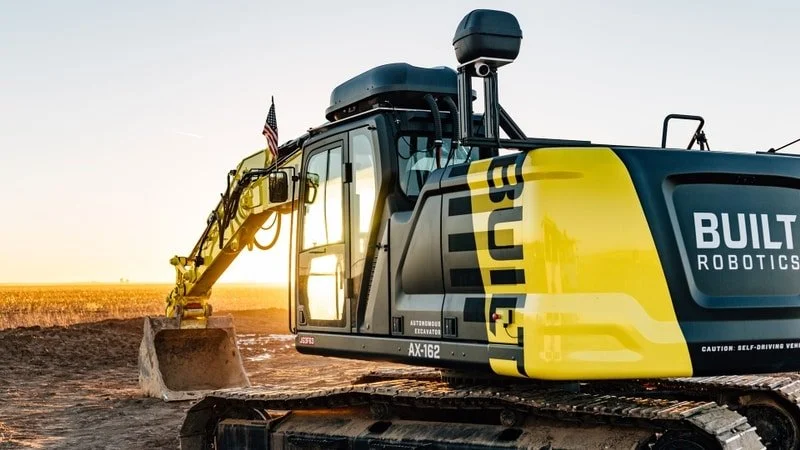
Instead of an operator manually controlling every movement, autonomous systems can increasingly perform certain repetitive operations with limited human intervention. Companies are developing systems capable of automating equipment such as excavators, dozers, and articulated dump trucks while coordinating them through fleet-management software.
That creates an interesting possibility for large earthmoving projects.
Imagine a mass excavation operation where excavators, haul trucks, and dozers are connected through the same digital system. Rather than relying entirely on radio calls and human dispatching, software can help determine where trucks need to go, which machine is ready for another truck, and how material should move through the site.
This concept is already technically possible in specialized applications. Autonomous-equipment platforms are being designed to coordinate conventional, remotely operated, and autonomous machines within the same earthmoving fleet. citeturn0search15
That does not necessarily eliminate equipment operators.
Instead, it could change what an operator does.
A worker who previously spent an entire shift performing the same repetitive cycle might eventually supervise multiple machines, intervene when unusual situations occur, or handle the complicated work that automation cannot reliably perform.
And construction provides plenty of complicated situations.
Why Construction Is So Difficult to Automate
Manufacturing automation is comparatively straightforward because factories are controlled environments. The floor does not turn into mud after a thunderstorm. The production line does not suddenly develop a six-foot trench overnight. Materials generally arrive at predictable locations, machines stay where they are supposed to stay, and the physical environment can be carefully controlled.
Construction sites are almost the opposite.
A jobsite can look completely different Monday morning than it did Friday afternoon.
Earth gets moved. Trenches appear. Temporary roads change. Materials arrive. Cranes relocate. Workers enter and leave equipment operating areas. Weather changes ground conditions. A delivery truck parks somewhere unexpected.
For autonomous equipment, every one of those changes matters.
Recent reporting on construction robotics highlights exactly this problem: construction sites are among the hardest environments for autonomous systems because they are constantly changing. As a result, the near-term future appears less likely to involve completely autonomous jobsites and more likely to involve human-in-the-loop automation, where machines perform repetitive tasks while people remain responsible for judgment and unexpected situations. citeturn0news97
That distinction is important.
The construction robot of the near future probably is not a machine that receives a blueprint Monday morning and hands over a finished building Friday afternoon.
It is much more likely to be a machine that tells a superintendent:
"I inspected the project. Here are three areas where today's work doesn't appear to match the plan."
That might sound less dramatic, but on a multimillion-dollar project it could be incredibly valuable.
AI Is Becoming Another Set of Eyes on the Jobsite
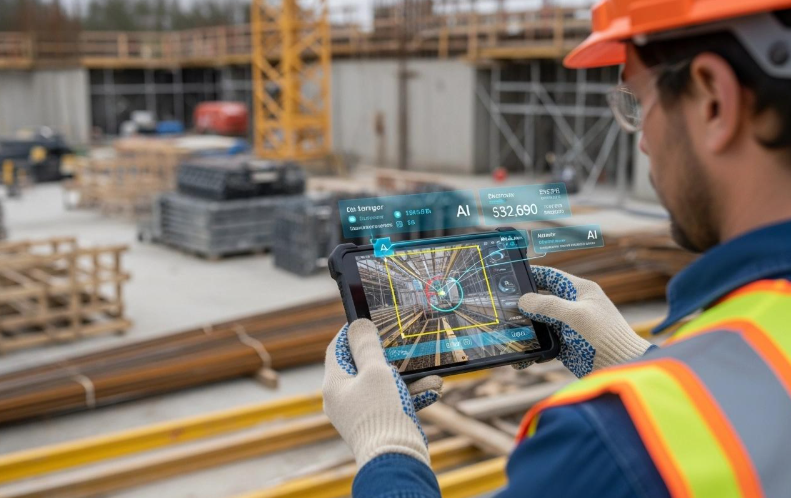
One of the most immediately useful applications of AI in construction is computer vision.
Construction companies already use cameras to document projects. AI allows those cameras to become much more useful because software can analyze what they are seeing instead of simply recording video.
An AI-powered system can potentially review thousands of images and identify patterns that would take a person hours to find manually.
That opens the door to automated progress tracking.
A superintendent might normally walk the project, talk to several foremen, inspect completed work, compare progress against the schedule, take photographs, and then create a report.
Now imagine software continuously analyzing jobsite imagery.
It could potentially identify which areas have changed, determine whether certain work appears complete, flag potential safety issues, and prepare a summary before the superintendent even begins the morning meeting.
AI-powered jobsite intelligence systems are already being developed around exactly these capabilities, using visual data to support progress monitoring, safety compliance, security, and daily project briefings. citeturn0news89
The result is not necessarily fewer supervisors.
It could mean supervisors spend less time collecting information and more time making decisions.
Digital Twins Could Give Projects a Virtual Copy
Another technology moving deeper into construction is the digital twin.
A digital twin is essentially a virtual representation of a real physical asset that can incorporate real-world data about its condition and performance. Unlike a traditional 3D model, a sophisticated digital twin can continue changing as the physical project changes. citeturn0news70
Think about a major construction project containing thousands of components.
The digital version might include the building's structural elements, mechanical systems, utilities, equipment locations, schedule information, inspection data, and sensor readings.
Now combine that information with AI.
Suddenly, the model becomes more than something people look at during planning meetings.
It becomes something software can analyze.
An AI system could potentially recognize that one portion of the project is falling behind schedule and then calculate how that delay could affect several downstream activities.
Instead of discovering a major scheduling problem two weeks later, the project team might receive a warning much earlier.
That ability to predict problems before they become expensive is one of the biggest promises of AI in construction.
Robots Are Becoming Construction Specialists
Another fascinating development is that construction robotics is becoming increasingly specialized.
Rather than attempting to create one robot capable of doing everything a construction worker can do, engineers have been developing machines designed around particular tasks.
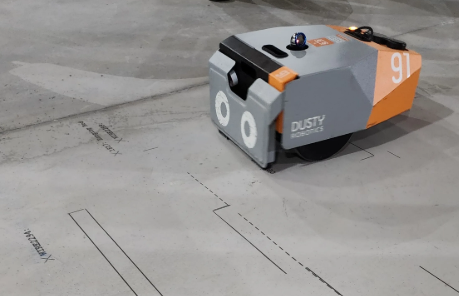
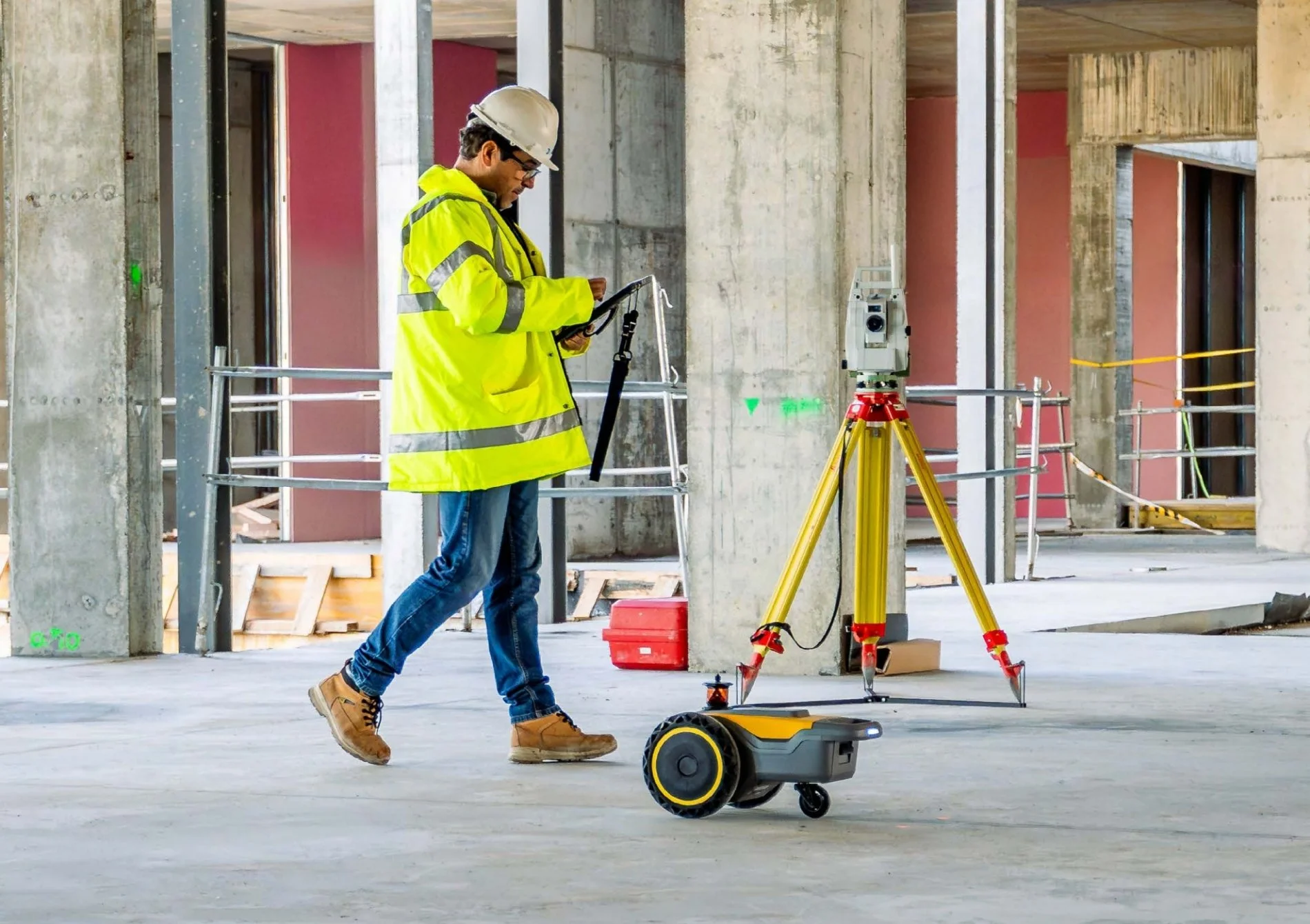
Robots can assist with layout.
Machines can automate portions of excavation.
Robotic systems can work with rebar.
Large-scale additive-manufacturing systems can print structural components and walls.
Reality-capture systems can repeatedly scan jobsites.
A 2026 construction robotics report described layout printers, excavator autonomy kits, rebar robots, and digital-capture platforms as technologies that have progressed beyond isolated demonstrations and are being reused on suitable projects. citeturn0search4
This specialized approach makes sense.
Construction contains hundreds of repetitive tasks, and automating even one of them can create substantial savings when that task occurs thousands of times.
Consider layout.
A worker might spend hours reading drawings, measuring locations, and marking exactly where walls or other components belong.
A robotic layout system connected to the project's digital model can potentially automate much of that process.
The robot does not need to understand how to construct the entire building.
It only needs to be extremely good at layout.
That is likely how robots will continue entering construction: one task at a time.
Then There Are Humanoid Construction Robots
This is where things start looking like science fiction.
Researchers are actively investigating whether humanoid robots could eventually perform construction tasks.
The logic behind humanoid robots is surprisingly straightforward.
Jobsites are designed for humans.
Doors, stairs, ladders, tools, handles, controls, and workspaces generally assume a worker with two arms, two legs, hands, and approximately human dimensions.
Instead of redesigning the entire environment around a specialized machine, engineers can theoretically design a machine capable of operating within environments already designed around people.
A recent 2026 research paper demonstrated a perception-and-action system that allowed a humanoid robot to learn construction-related movements from human demonstrations. The researchers reported successful execution of eight construction-related actions, although the technology remains an early research step rather than evidence that humanoid construction crews are about to become commonplace. citeturn0academia99
Potential future applications could include carrying materials, inspections, repetitive assembly, and work in hazardous locations. Research into humanoid construction robotics has particularly highlighted material handling, transport, assembly, inspection, and dangerous tasks as possible areas of use. citeturn0search5
But humanoid robots still have enormous challenges ahead.
Construction requires strength, balance, adaptability, spatial awareness, durability, and extremely reliable safety systems.
A robot operating inside a laboratory is one thing.
A robot walking across uneven ground while workers, skid steers, excavators, cranes, trucks, and forklifts move around it is something completely different.
For now, specialized construction robots are far more practical.
AI Is Also Attacking Construction's Paperwork Problem
The biggest AI revolution in construction might actually happen somewhere less exciting than the equipment yard.
The office.
Construction generates an incredible amount of information.
There are drawings, specifications, RFIs, submittals, contracts, inspection reports, change orders, schedules, safety documentation, equipment records, emails, daily reports, photographs, and meeting notes.
Finding one important detail can sometimes mean searching through hundreds or thousands of pages.
AI is becoming increasingly capable of searching and interpreting that information.
Imagine asking a construction AI:
"Does anything in the mechanical specifications conflict with the latest drawing revision?"
Or:
"Show me every RFI related to the storm drainage system."
Or:
"What changed between these two plan sets?"
Instead of manually searching documents, a project manager could receive an answer in seconds and then verify it against the original documents.
Industry analysis in 2026 increasingly describes AI not simply as one isolated construction application but as a shared technology layer that can support RFIs, submittals, change orders, quality control, safety, procurement, and cost management. citeturn0search21
That could be transformational because construction's biggest inefficiencies are not always caused by physical labor.
Sometimes they are caused by information arriving late.
The Worker Shortage Makes Automation More Important
Construction's interest in automation is not happening in isolation.
The industry continues to deal with shortages of skilled labor while projects become increasingly complicated.
Deloitte's 2026 engineering and construction outlook points to labor shortages alongside inflation, interest rates, supply-chain disruptions, material costs, and schedule pressure as major challenges facing firms. citeturn0news23
Automation therefore becomes attractive even when companies have no intention of dramatically reducing their workforce.
If a contractor cannot find enough experienced workers, technology that allows existing employees to accomplish more becomes extremely valuable.
One experienced operator supervising automated machines could eventually accomplish work that previously required several operators.
A superintendent using AI to analyze project documentation could potentially manage information that once required hours of administrative work.
A survey robot could collect measurements while surveyors focus on higher-value work.
Technology becomes a force multiplier.
Construction Workers Aren't Disappearing
Whenever AI and robotics enter the conversation, one question immediately appears:
Will robots take construction jobs?
Some roles will undoubtedly change.
Highly repetitive tasks are particularly vulnerable to automation. Entry-level responsibilities may change as well because software will increasingly handle portions of documentation, measurement, monitoring, and planning.
But replacing an entire construction workforce is enormously more difficult.
Construction depends heavily on human judgment.
Experienced workers notice things that are difficult to write into an algorithm.
They hear that an engine sounds wrong.
They recognize that soil feels different.
They know when weather is about to create problems.
They understand when something shown on a drawing simply will not work in the field.
That accumulated experience remains incredibly valuable.
The more realistic future is probably a partnership.
Machines handle repetition.
AI handles enormous amounts of information.
Humans handle uncertainty.
The Jobsite of 2035 May Look Very Different
Stand on a major construction project ten years from now and the equipment might look familiar.
There will probably still be excavators.
There will still be dozers.
There will still be cranes and haul trucks.
There will still be people wearing hard hats and safety vests.
But what those machines and people are doing could be dramatically different.
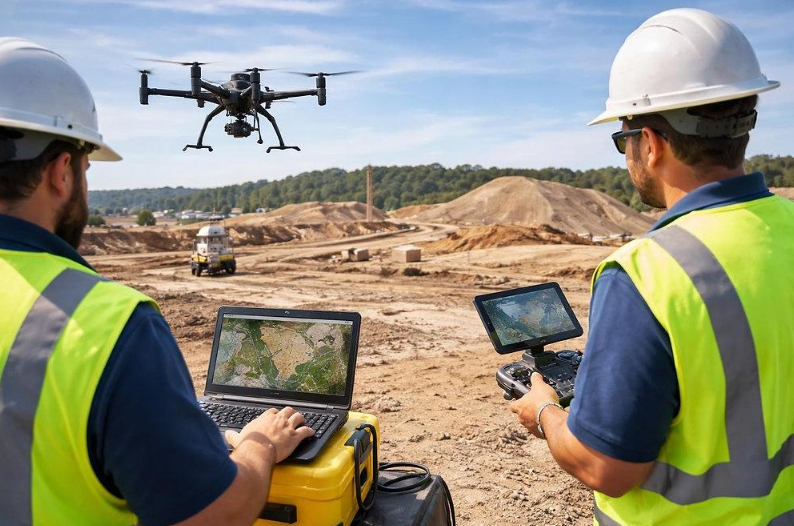
A drone could scan the project every morning.
AI could compare the scan against the digital model.
Autonomous haul trucks could move material along designated routes.
Semi-autonomous excavators could perform repetitive digging operations.
Robots could complete layout work inside buildings.
Superintendents could receive AI-generated summaries explaining what changed during the previous shift.
Workers could ask questions about plans through conversational AI instead of searching through hundreds of pages.
And specialized robots—or eventually humanoid machines—could enter dangerous areas before people do.
None of these technologies needs to eliminate the construction worker to transform construction.
They simply need to make each worker more capable.
Construction's Next Revolution Has Already Started
Construction has experienced technological revolutions before.
Hydraulic equipment transformed excavation.
Power tools changed carpentry.
Tower cranes changed how high we could build.
GPS machine control changed grading.
Building Information Modeling changed design coordination.
AI, robotics, autonomous equipment, computer vision, and digital twins appear to represent the next stage.
The difference is that these technologies are beginning to connect.
The machine operating in the dirt can generate data.
The drone flying overhead can generate more data.
The project's digital model can organize that information.
AI can analyze it.
And workers can use the results to make better decisions.
Adoption is still uneven. One late-2025 survey reported that only 27% of architecture, engineering, and construction respondents were using AI, but an extraordinary 94% of those existing users said they expected to increase their AI usage during 2026. citeturn0search9
That captures where construction currently stands.
We are not at the fully autonomous jobsite.
We are at the beginning of the transition.
The most exciting thing happening in construction right now is not simply that robots can lay out walls or that AI can read drawings. It is that construction equipment, project data, digital models, cameras, robots, and AI are beginning to operate as parts of the same connected system.
For an industry built around solving difficult physical problems, that could be one of the biggest technological shifts since heavy machinery itself.
And the workers who learn how to operate, supervise, and work alongside these new systems may become some of the most valuable people on tomorrow's jobsite.